Friday, April 22, 2022

Old Sarracenia photos - Part 1

 As the last few seasons have been quite iffy for plants locally (the spring winds are the killer, wrecking the pitchers), I haven't taken so many photos of them. Here's what I did take over the last few years since I stopped posting.

Sarracenia collection, November 2020

This was the collection in early November 2020. The S. flava flowers are finishing up and the pitchers are in full cry.

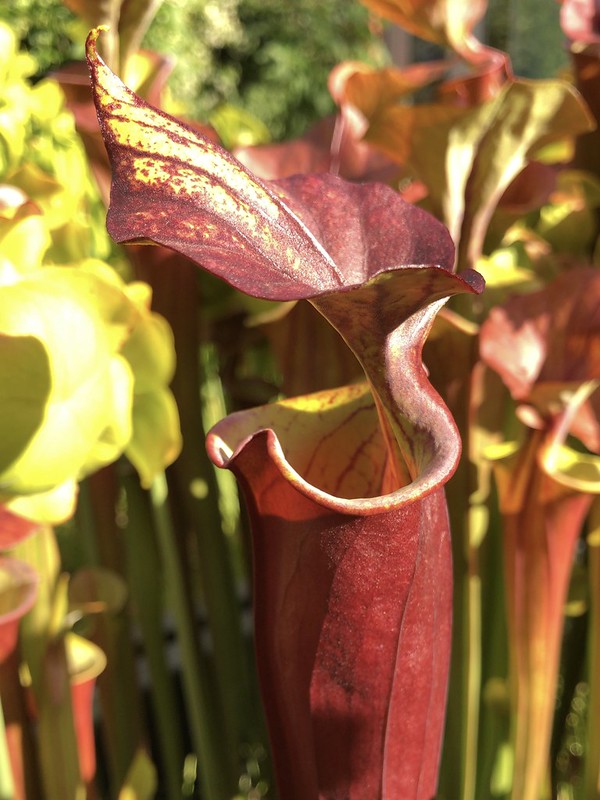
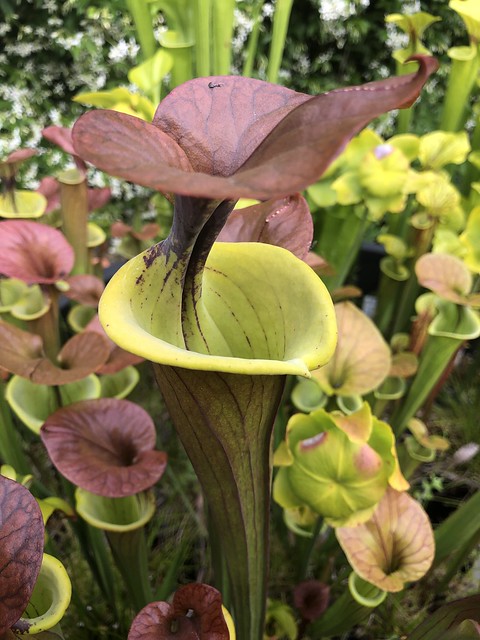
Sarracenia flava var. rubricorpora “nearly all red lid”; 2020-21 season Sarracenia flava var. rubricorpora “FRT 1”; 2020-21 season

The above pitchers are of a S. flava var. rubricorpora with a nearly all-red lid. It was seed grown by Gotcha! Plants and can fill in very red mid-summer. I've had it since early 2018.

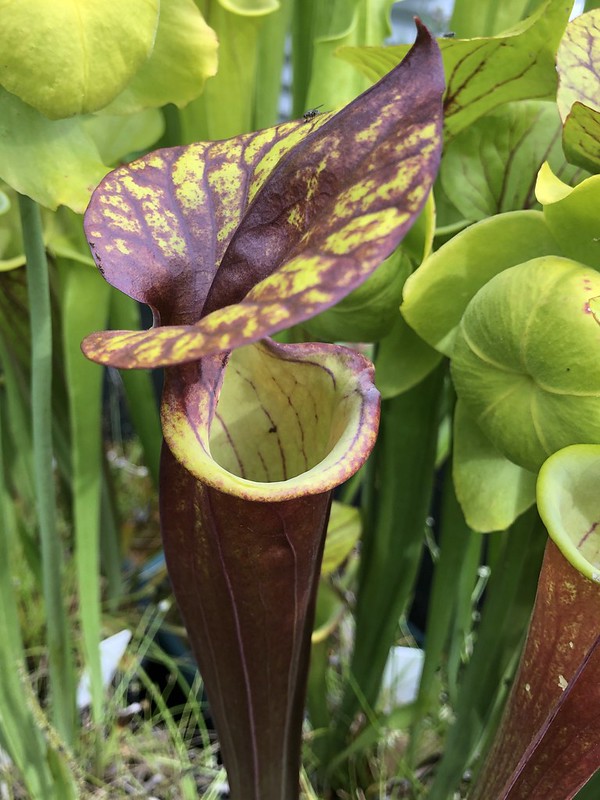
Sarracenia flava var. ornata “big mouth, compact lid”; 2020-21 season

This handsome flava var. ornata-looking thing is actually a hybrid of unknown parentage. Owen O'Neil of Strange World Carnivores sold it to me as a flava in December 2017 (see this post for pics from the day), but its since become apparent its a hybrid. Owen now sells it as "Sullivan's Legacy", recognising Richard Sullivan from Bathurst who originally bred it. Richard had a huge collection of carnivores, but has sadly disappeared from the scene. I met him once at an AUSCPS sale at Mount Tomah, and he invited me out to see his plants, which were beautifully grown. He was a top guy.

Sarracenia flava var. cuprea “Ross Rowe”; 2020-21 season Sarracenia flava var. cuprea “Gotcha Plants heavy vein”; 2020-21 season

Now for some flava var. cuprea. At left is a plant that is one of the best flava var. cuprea around. I call it 'Ross Rowe' after its originator, a local Canberra grower very active with the Canberra chapter of the AUSCPS. You can buy plants direct off him via Facebook (I don't have a link, but if you look him up, you should be able to find him). Almost as good is a heavy veined cuprea from Gotcha! Plants grown from seed supplied to John Creevey from Allen Lowrie. I've sold a number of divisions of this plant over the years, so its around if you look for it.

I'll leave it there for today, and post more pics over the coming days and weeks.

A fluke mobile phone shot...

I managed to pull off a very nice fluke shot while out taking a few idle pics of the few decent Sarracenia pitchers yesterday.

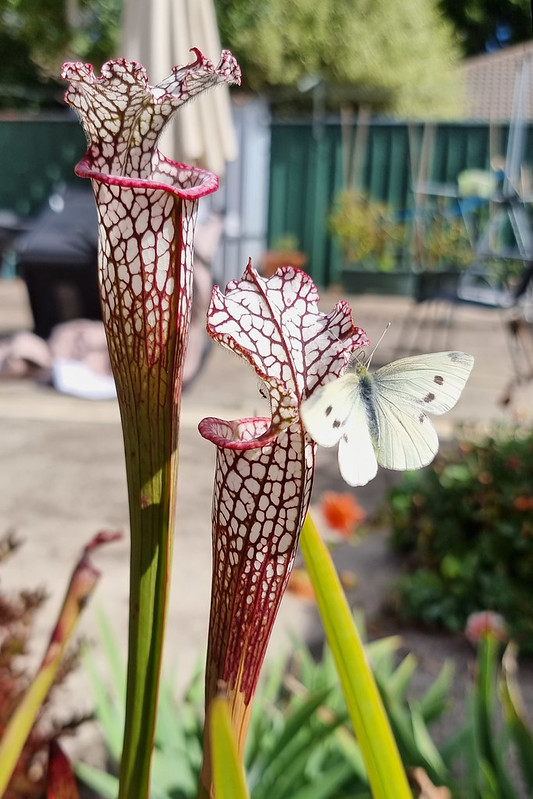
Cabbage white (Pieris rapae) feeding at a Sarracenia leucophylla pitcher

This female Cabbage White butterfly (Pieris rapae) was having a good feed at a seed-grown S. leucophylla that had recruited itself into some flytraps Owen of Strange World Carnivores sold me a few years ago. As I hit the shutter, I managed to fluke a nice shot of the butterfly taking to the air:

Cabbage white (Pieris rapae) feeding at a Sarracenia leucophylla pitcher

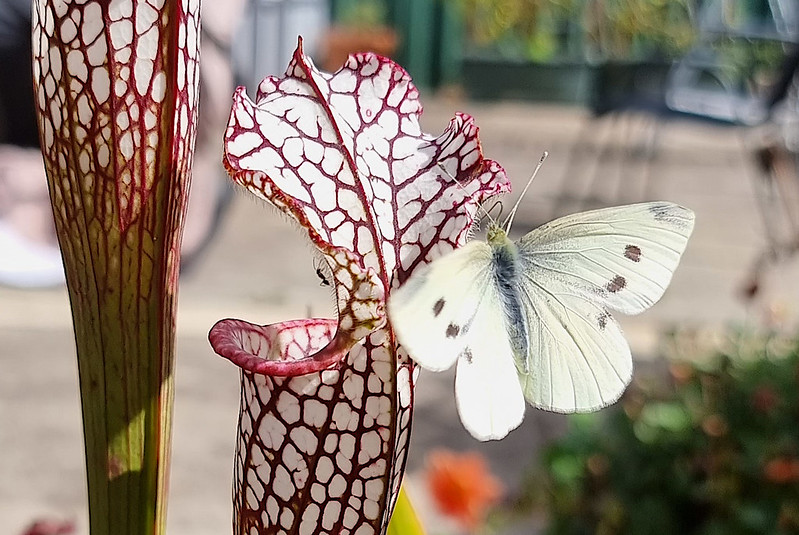
Zooming in, there's actually a bit going on in that shot...

Cabbage white (Pieris rapae) feeding at a Sarracenia leucophylla pitcher

Not only did I score the butterfly in decent focus, I caught its proboscis midway through being re-coiled, and an ant (probably White-footed house ant, Linepithema humile) traversing the downward-pointing hairs under the pitcher's lid.

I very much prefer my DSLR though...

Tuesday, April 12, 2022

A few autumn Sarracenia leucophylla pitchers

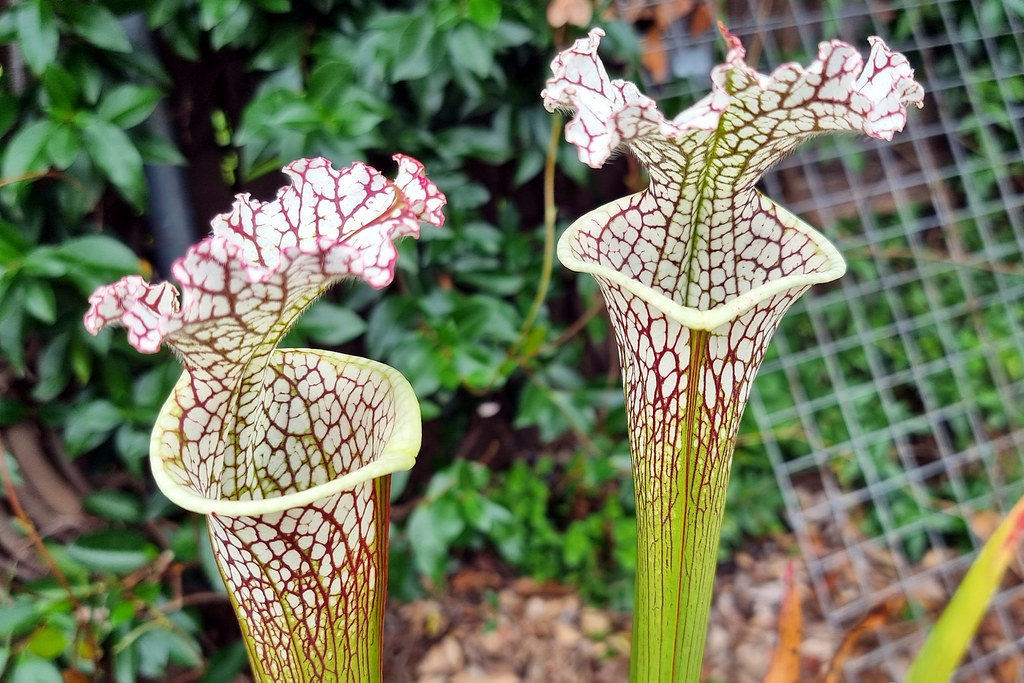
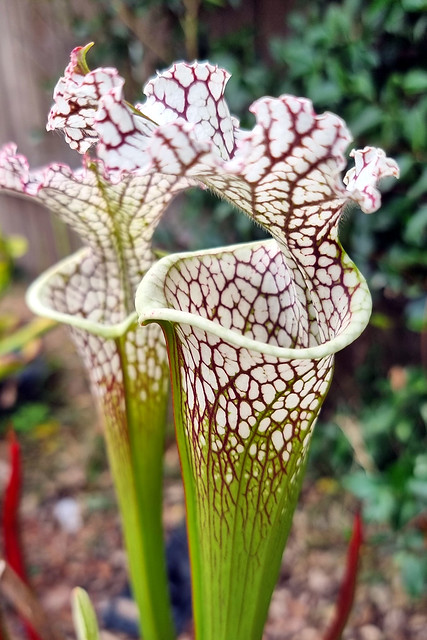
Despite 2021-22 being such a lackluster season, the Sarracenia leucophylla are putting up a few nice traps this year. As I parted with most of my S. leucophylla in 2019, I have only a few left, including this plant from Strange World Carnivores with lovely white windows and strong venation.

Sarracenia leucophylla (autumn 2022 pitchers)

Sarracenia leucophylla (autumn 2022 pitchers)  Sarracenia leucophylla (autumn 2022 pitchers)

I managed to catch this incredible view of it lit up by the setting sun the other week - beautiful beyond words! The photo doesn't do it justice...

Sarracenia leucophylla (autumn 2022 pitchers) Sarracenia leucophylla (autumn 2022 pitchers)

My S. leucophylla collection now consists of only the above clone, some cv. "Tarnok", a pink plant that I call 'Pink English' for Carol English who grew it from seed (noting it may be the same plant that Triffid Park sell as 'Ruby Joyce'), and a rather white hooded clone also from Strange World Carnivores. 

To finish off, here's the white hooded clone. I did briefly have 'Hurricane Creek White', which is much, much whiter than this plant, but it unfortunately died in an extremely hot summer before I could divide it.

Sarracenia leucophylla (autumn 2022 pitchers)

JN.

Monday, April 11, 2022

Fun things to do with your Rapid Antigen Test UV-LED torch...

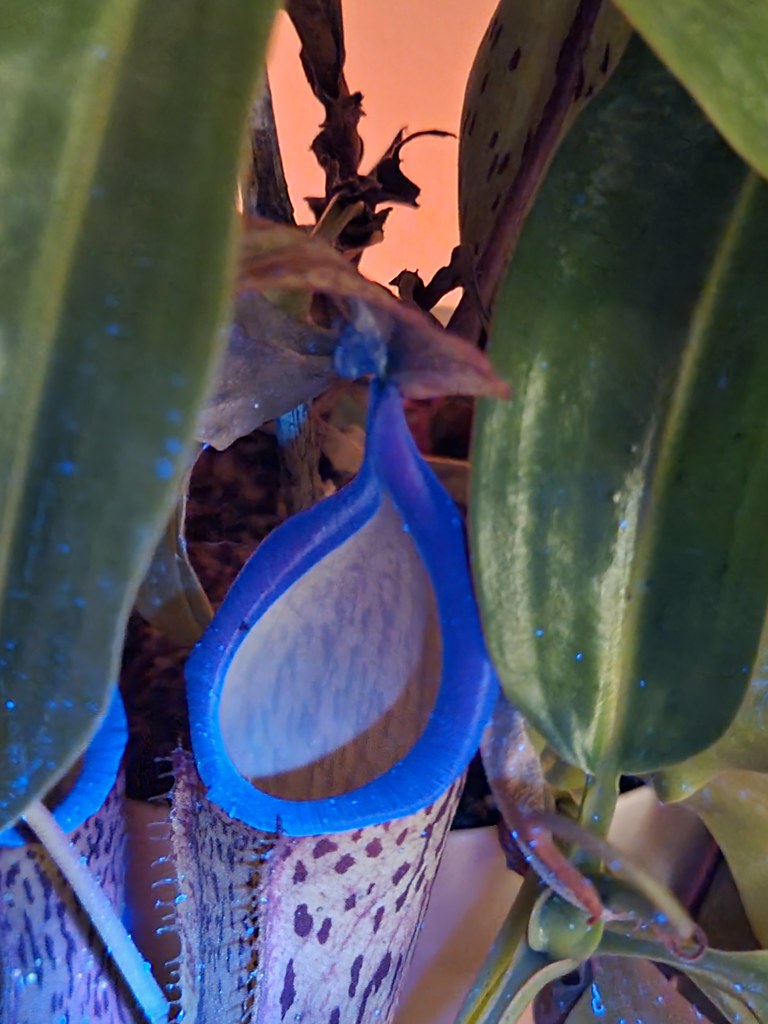
Rapid Antigen Tests (RATs) are an unfortunate fact of post-COVID life in Australia. But here's a nerdy  use for the LED torch that comes with the test kits - you can make your Nepenthes and Sarracenia pitchers glow brilliantly under the UV torch light!

Here's what my Nepenthes maxima alata looks like under UV light:

Nepenthes fluorescing under UV light

We are still figuring out what this means from a biological perspective. An excellent paper published in the ICPS journal a few years back notes that UV fluorescence is not the same a UV visibility. Fluorescence is instead where the wavelength of UV light is altered, moving it into the visible spectrum. The biological significance of fluorescence vs. reflectance of UV light is still uncertain and much research is needed in this area.

Its worthy to note that a paper that does use actual UV photography (i.e. photography through a filter that excludes anything but UV wavelengths) does resolve the glowing peristome - something that the authors appear to have overlooked at the time...

Sunday, April 10, 2022

The 2019 Triffid Park Open Day

I just realised I never got around to posting about the Triffid Park open day back in 2019... so here goes!

Triffid Park is Australia's largest CP nursery and has some lovely plants. Just before COVID reared its nasty head, they held their annual open day, which I managed to make. My aim was to acquire a few Sarracenia flava clones missing from the collection.

While I have been to Triffid Park three times and knew what to expect, a first visit is quite overwhelming due to the sheer volume of plants.

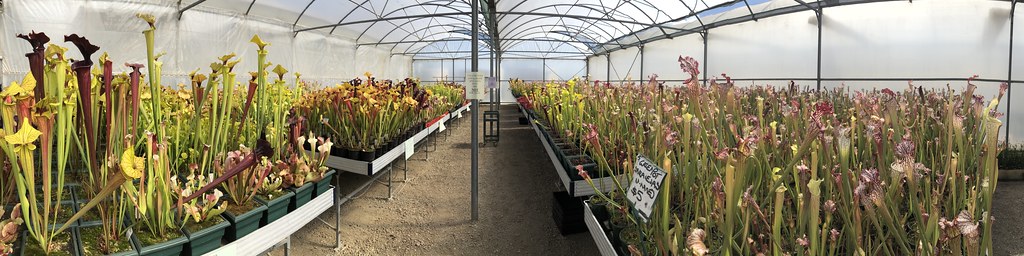
To show what I mean, here's a view of the main Sarracenia greenhouse:

Sarracenia house, Triffid Park’s 2019 open day, Victoria, Australia. 
And here's a view of just the S. flava:

Sarracenia flava; Triffid Park’s 2019 open day, Victoria, Australia.

Triffid Park grow beautiful Sarracenia - here's a few pics of their plants...

Sarracenia flava; Triffid Park’s 2019 open day, Victoria, Australia. Random Sarracenia; Triffid Park’s 2019 open day, Victoria, Australia.

Sarracenia flava et al.; Triffid Park’s 2019 open day, Victoria, Australia. Sarracenia ‘Paradisea f. Red’ et al.; Triffid Park’s 2019 open day, Victoria, Australia.

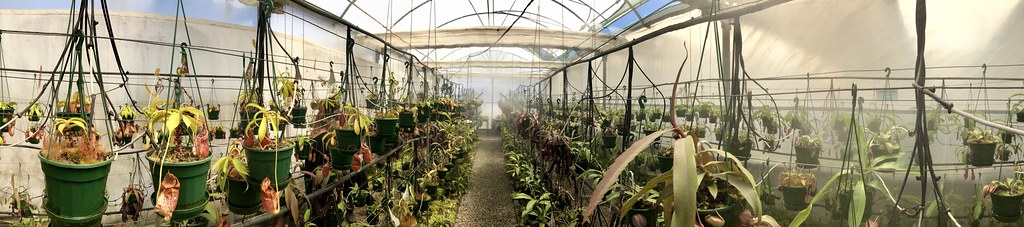
Their Nepenthes house is extremely impressive too. The racks were quite bare within hours of the doors being opened!

Nepenthes house, Triffid Park’s 2019 open day, Victoria, Australia.

Nepenthes house, Triffid Park’s 2019 open day, Victoria, Australia. Nepenthes house, Triffid Park’s 2019 open day, Victoria, Australia.

Their massive specimen plants of N. truncata and Heliamphora were stunning!

Nepenthes truncata; Triffid Park’s 2019 open day, Victoria, Australia. Heliamphora; Triffid Park’s 2019 open day, Victoria, Australia.

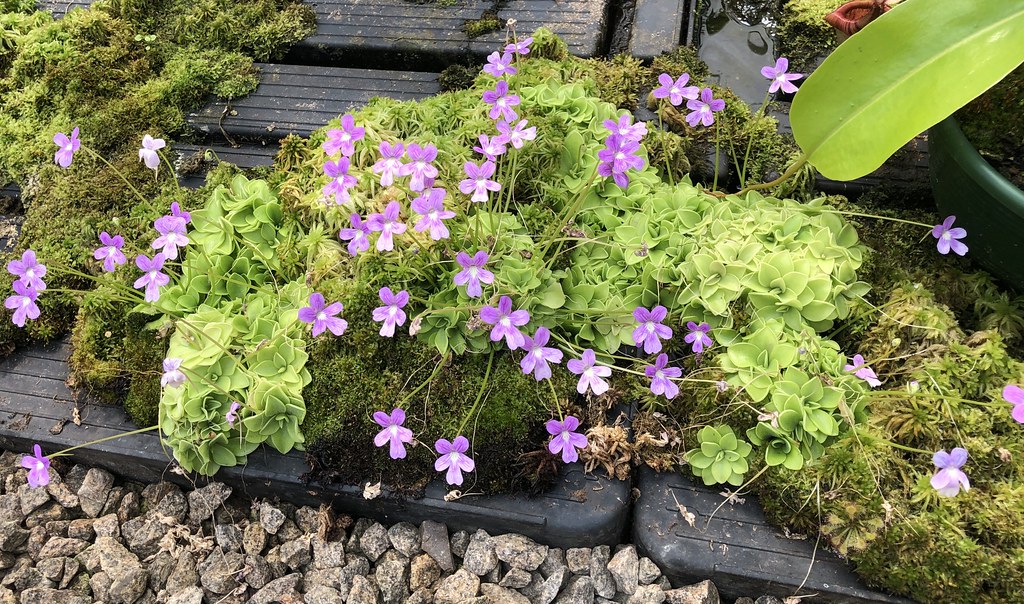
Carpets of Pinguicula emarginata x (x 'Wesser') grew under the Nepenthes in the cooler intermediate conditions.

Pinguicula emarginata x (x ‘Wesser’); Triffid Park’s 2019 open day, Victoria, Australia.

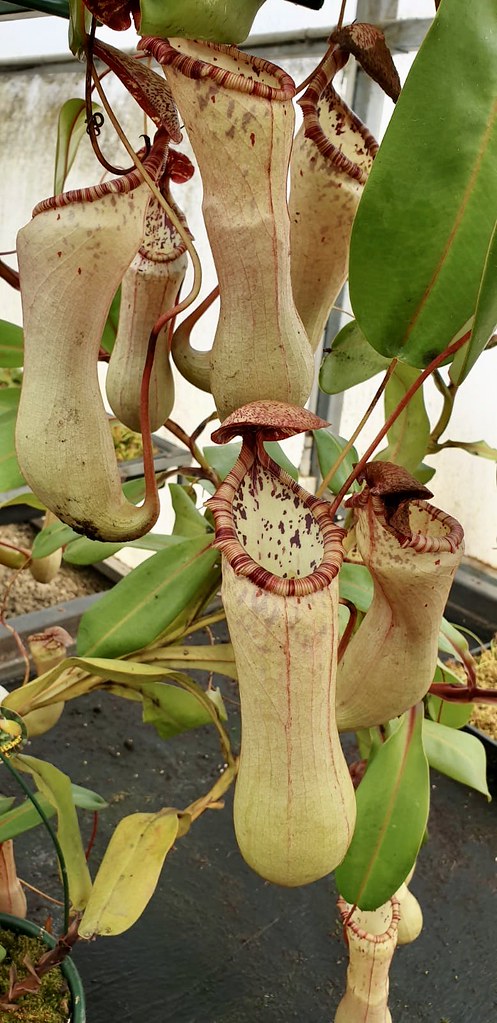
Here's the Triffid Park clone of N. veitchii x maxima, and a N. clipeata x ventricosa.

Nepenthes veitchii x maxima (= x allardii); Triffid Park’s 2019 open day, Victoria, Australia. Nepenthes; Triffid Park’s 2019 open day, Victoria, Australia.

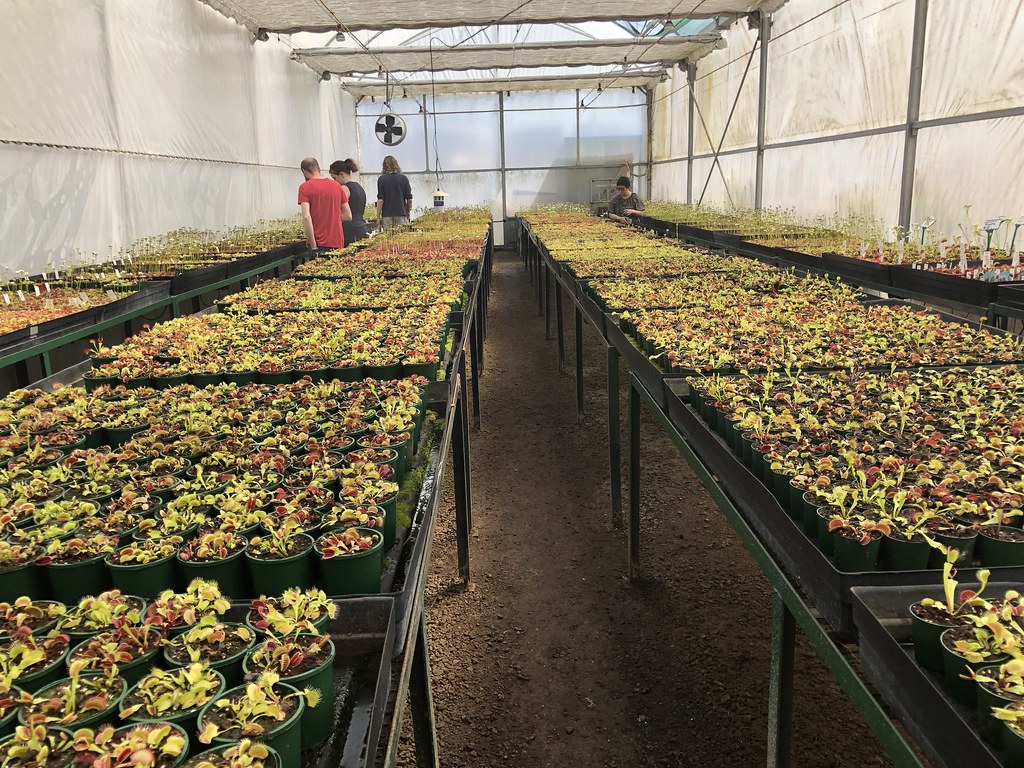
And to round it off, here's the VFT house. Triffid Park offer a huge number of VFT clones, and seeing so many in one place was spectacular indeed.

Flytrap house; Triffid Park’s 2019 open day, Victoria, Australia.

I'm hoping this was not the last Triffid Park open day... may there be many more to come!

Till next time!

JN.

We're back online!

 Its been a while... and with COVID blues, a new job, a new computer with no offline blog writer, locking myself out of the blog and being waylaid mid-COVID with a secret project, times have been... interesting. But with some encouragement (thanks Damo!), the blog is back!

Speaking of which: Damian Poromboka (said Damo above) has just started a beautiful website for CPs here in Canberra. Its well worth a visit and is much more slick than mine! Here's the link:

https://carnivorousplantsbydamo.com/

The 2020-21 season was surprisingly better than 2021-22 season that is just ending up. Here's how it started:

Sarracenia collection, November 2020

Spring 2020 was not too windy, so the plants looked ok for some time. I didn't take too many photos at the time unfortunately, so here's what I have:

Sarracenia flava var. atropurpurea “FRT 1-1”; 2020-21 season

I have to re-start the blog with my favourite plant of course - FRT 1-1.  When newly opened, the pitchers do develop the bluish sheen seen here...

I'm also keen to not write such long blog posts, so I'll trickle feed the photos on over the next few days...

Till then...

JN.

Monday, April 22, 2019

Autumn 2019 roundup – its been hot, hot, hot!

Last time I blogged, it was quarter of a year ago and midsummer. The flava were just finishing up, and I was making a Drosera schizandra terrarium.

So then what happened?

It got hot. Seriously hot! And it stayed hot well into March, with April also being hotter than normal, but bearable. In late January, we had 10 days of maximums not below 36°C (most of the week was above 40°C!) with windy conditions, and this set everything back very badly (even though we kept water up to everything). By this time next week, we will have had our first real frosts, with the weekend set to get 1°C minimums, so autumn has been very truncated.

Autumn pitchers of Sarracenia leucophylla, 2018-19 season. Autumn pitchers of Sarracenia leucophylla, 2018-19 season. Autumn pitchers of Sarracenia leucophylla, 2018-19 season. Autumn pitchers of Sarracenia leucophylla, 2018-19 season.Autumn pitchers of Sarracenia leucophylla, 2018-19 season. Autumn pitchers of Sarracenia leucophylla, 2018-19 season. Autumn pitchers of Sarracenia leucophylla, 2018-19 season. Autumn pitchers of Sarracenia leucophylla, 2018-19 season.

As a result, no-one in Canberra had decent pitchers from their autumn Sarracenia (i.e. Sarracenia leucophylla and S. rubra), with the pitchers arriving in early April. Most of the pitchers we did get were tiny. I managed to get a few half-decent ones (see above), but nothing like previous years. The pitchers above are close-ups, they are not very big at all.

I’m thinking it may be a safer bet to stay with the spring peaking species like S. flava

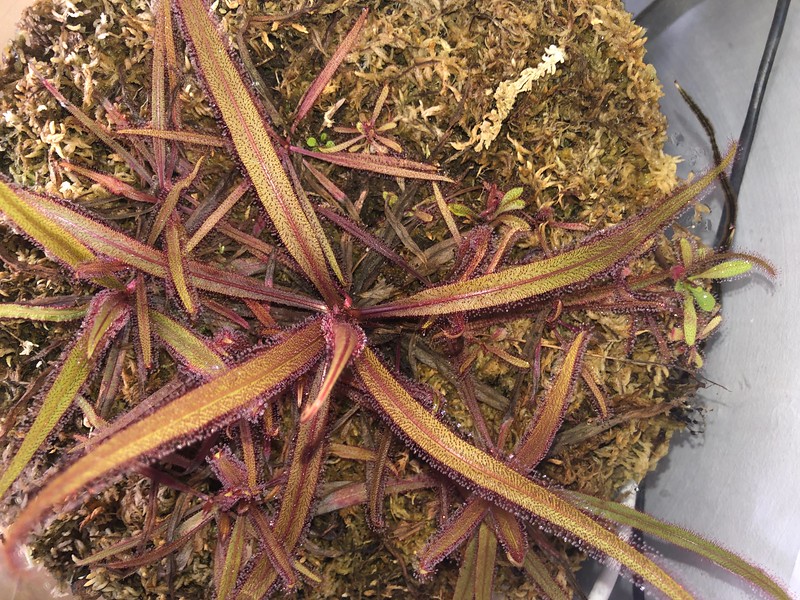
Drosera prolifera Drosera prolifera terrarium

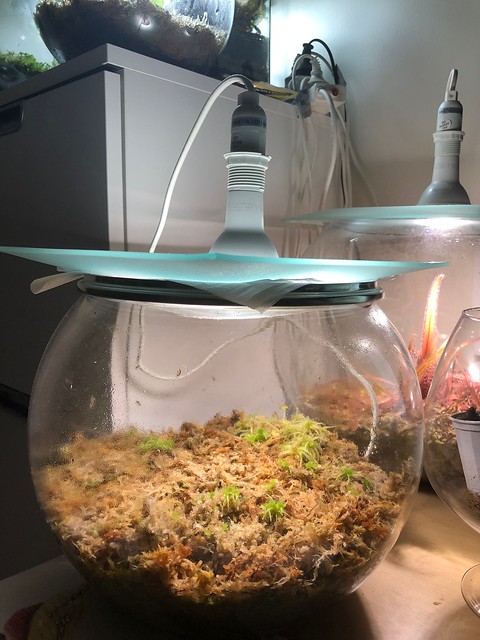
On the plus side, I managed to get the trifecta of Drosera Section Prolifera in the collection and growing successfully. The last addition was a D. prolifera via AUSCPS Canberra coordinator Barry (thanks Barry!). Its been going strong for about two months now and is putting up several leaves a week. So far, its still one plant, but I’m hoping it will be in flower by the end of winter and busily proliferating across its bowl. The setup is a slightly smaller glass bowl than the D. adelae, with a glass saucepan lid on top. I diffused the light from a 7W Vaxer lamp using a sheet of plastic foam paper (the type that manufacturers use to protect appliances when you buy them) folded into 4 layers) and a sintered glass plate, with the lamp on top.
Drosera adelae terrarium

The D. adelae is also going very well, with its roots now reaching all around the bowl. There should be a huge number of pups coming up soon (guaranteed if I help by taking to the bowl with a pair of scissors!). The parent plant, which was at death’s door at the end of last winter, is now about 400 mm across! Impressive!
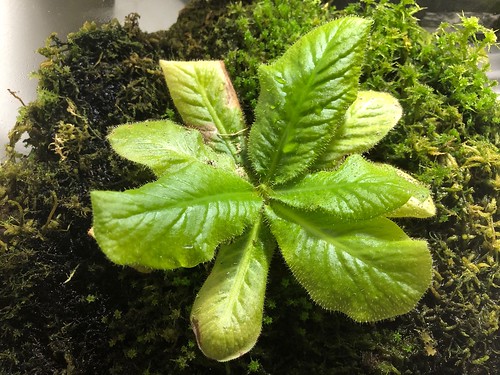
Drosera schizandra Drosera schizandra

The D. schizandra terrariums have been a lot more hit and miss. The first one I set up (left) was inadvertently put in a spot where it got a hour or so of full sun daily, which set it back. Fortunately, they give you some warning before they die, so I managed to catch it and fix it up in a new spot. However, a second terrarium that was positioned better has done well, with the plant not missing a beat – its been glistening in dew continuously from when it was re-potted.

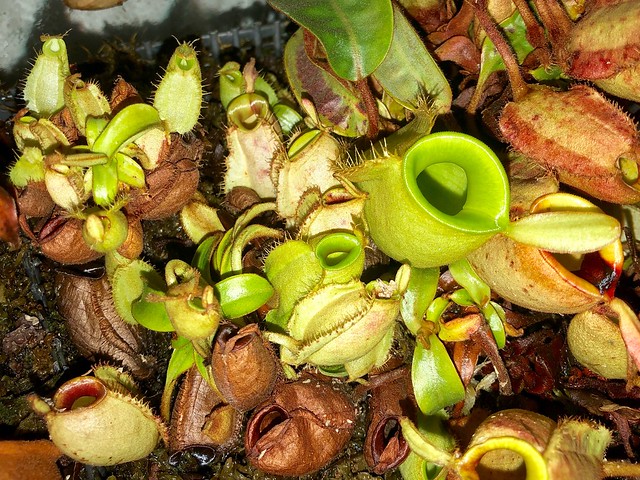
Nepenthes ampullaria terrarium Nepenthes ampullaria terrarium

The Nepenthes ampullaria and N. hookeriana terrarium was also tidied up, with the plants repotted into fresh mix. I also reduced the wattage of the lamp, replacing the 20W downlight with a 12W LED light bulb. The green form N. ampullaria responded by putting up a large pitcher a few days ago, so all good so far.
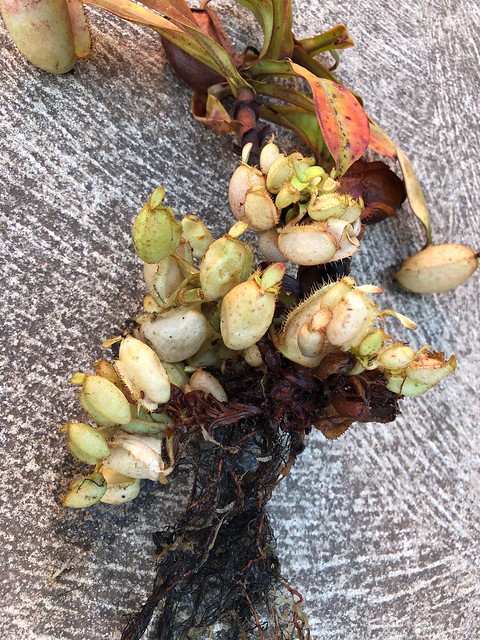
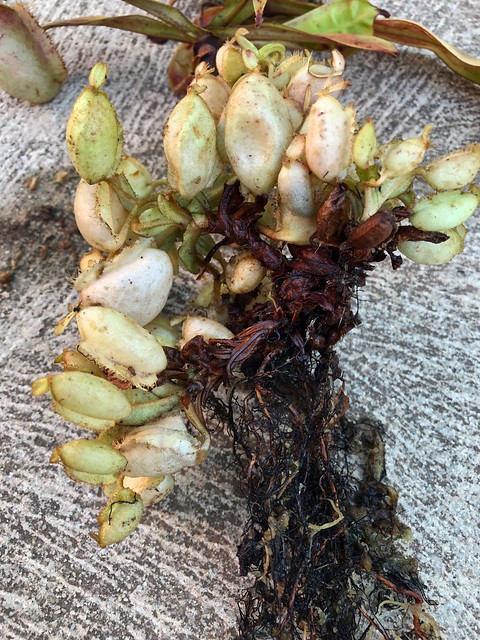
Cultivated Nepenthes ampullaria showing habit of basal pitcher production Cultivated Nepenthes ampullaria showing habit of basal pitcher production

Here’s how the green clone looked when de-potted. Note how the basal rosettes attach to the rhizome.

On the Sarracenia flava front, its repotting time. I’ve long been wondering why my flava var. rubricorpora have not been very red, and I’ve put it down to recycling peat from the bog 3 seasons ago (which would make it 6 seasons old – no wonder they weren’t happy!). I’m experimenting with a new formula of 2 peat: 1 sand: 1 scoria: 1 chopped pine needles. I’ve only managed one pot so far due to unexpected rain today, but the mix looks and feels very good. I’m hoping the scoria will help aerate the media more than using just peat, and am also hoping the pine needles will help reduce the amount of peat needed. Next time, I’ll put aside the pine needles and compost them for a full year before using it. I’m very interested in the peat-free mixes the UK growers are now using – the issue here is that the only remotely suitable material has lime added to it to increase pH, making it unsuitable for use in CP mixes (except Nepenthes – the mix I refer to is an orchid bark that I’ve used for them before with great results).

Collector’s corner display, Melbourne International Flower and Garden Show.Collector’s corner display, Melbourne International Flower and Garden Show.

I also managed to make it to Melbourne for the flower show a few weeks ago. Collector’s Corner had an impressive display with numerous CPs.

Pillar of Sarracenia x courtii; Collector’s corner display, Melbourne International Flower and Garden Show. Nepenthes x dyeriana; Collector’s corner display, Melbourne International Flower and Garden Show.

They even had a mound made entirely of S. x courtii (left)! At right is a N. x dyeriana.

Triffid Park’s display at the Melbourne International Flower Show, 2019Triffid Park’s display at the Melbourne International Flower Show, 2019Triffid Park’s display at the Melbourne International Flower Show, 2019

Triffid Park also had an impressive display too, with some beautiful Sarracenia. It was great to also have an opportunity to spend some time talking with Donna and Jason.

Red-Bodied Swallowtail (Pachliopta polydoras queenslandicus); Melbourne Zoo Butterfly House, Victoria, Australia.

And I even made it to the Melbourne Zoo, where I added a butterfly to my twitch list – the Red Bodied Swallowtail (Pachliopta polydoras queenslandicus). Its one of the few swallowtails in Australia I had not seen alive (the others being the alpine Graphium macleayanum and O. priamus macalpinei).

Cairns Birdwing (Ornithoptera euphorion); Melbourne Zoo Butterfly House, Victoria, Australia.

To close, here’s a male Cairns Birdwing butterfly (Ornithoptera euphorion), also in the Melbourne Zoo’s butterfly house.