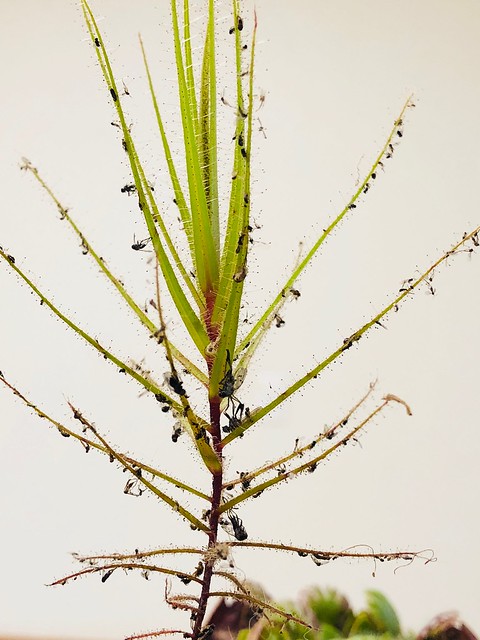
Sunday, April 10, 2022

We're back online!

 Its been a while... and with COVID blues, a new job, a new computer with no offline blog writer, locking myself out of the blog and being waylaid mid-COVID with a secret project, times have been... interesting. But with some encouragement (thanks Damo!), the blog is back!

Speaking of which: Damian Poromboka (said Damo above) has just started a beautiful website for CPs here in Canberra. Its well worth a visit and is much more slick than mine! Here's the link:

https://carnivorousplantsbydamo.com/

The 2020-21 season was surprisingly better than 2021-22 season that is just ending up. Here's how it started:

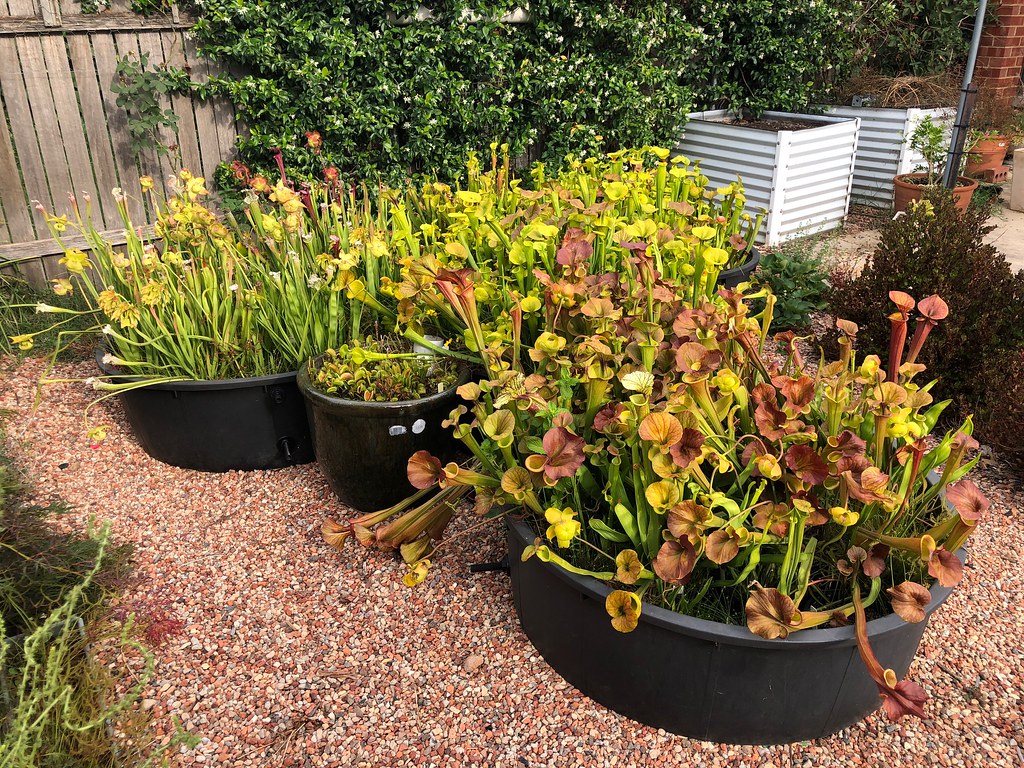
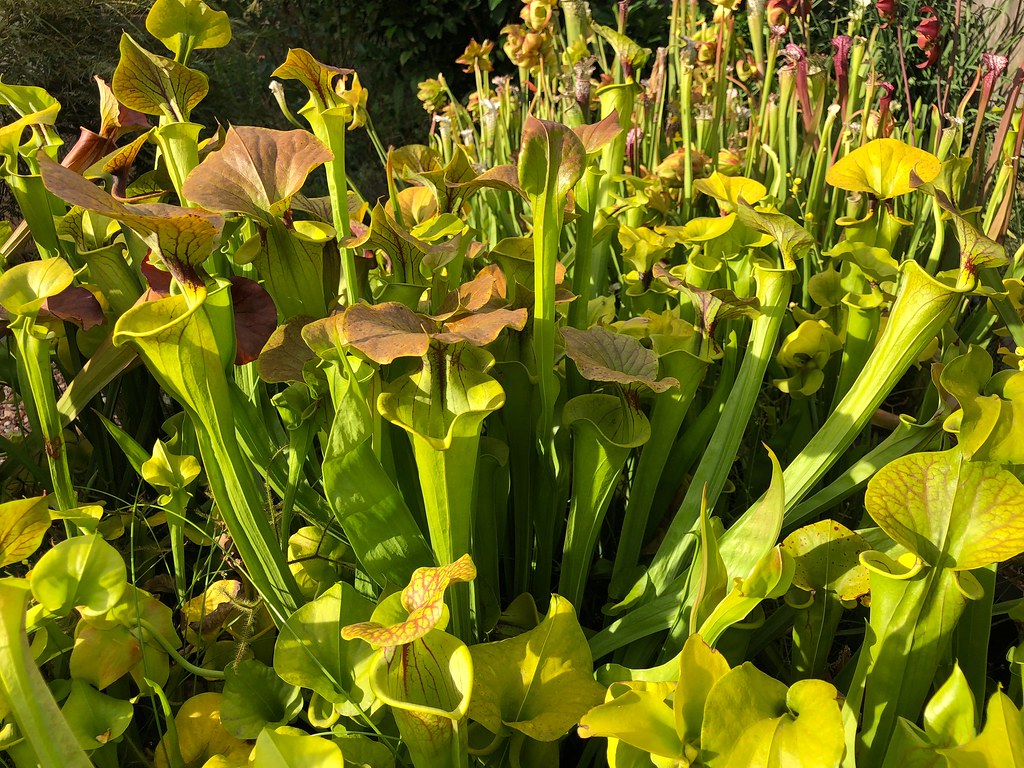
Sarracenia collection, November 2020

Spring 2020 was not too windy, so the plants looked ok for some time. I didn't take too many photos at the time unfortunately, so here's what I have:

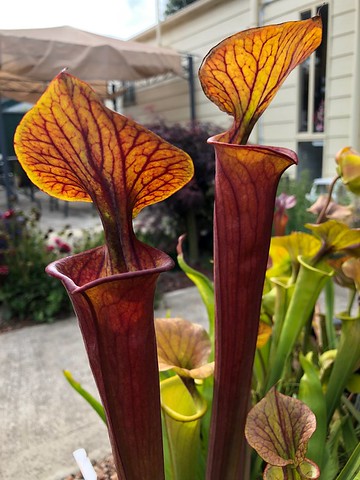
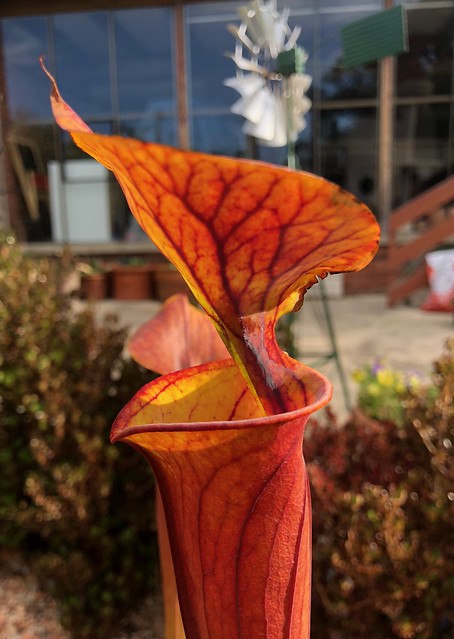
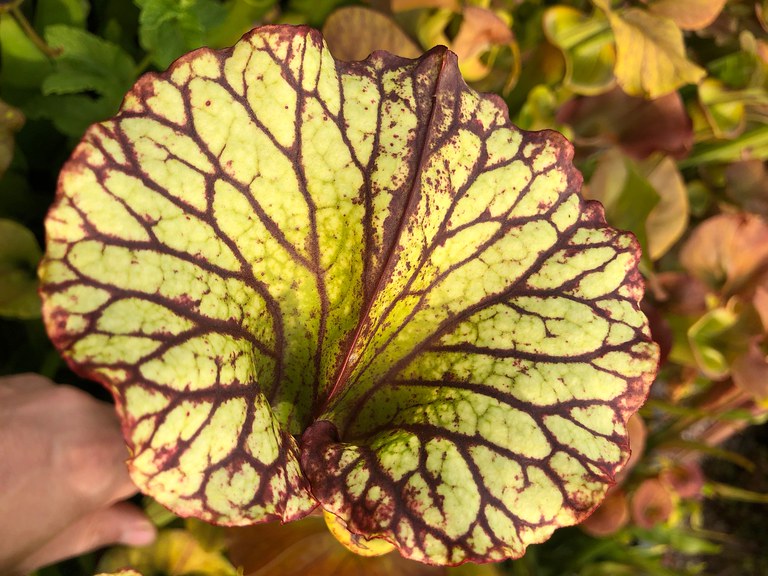
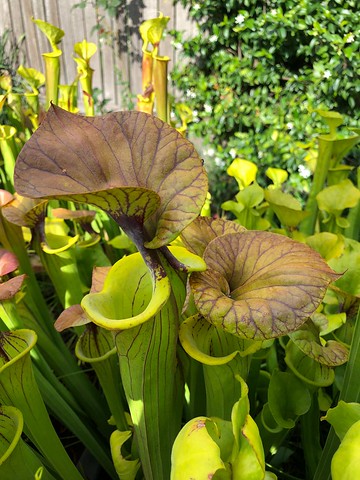
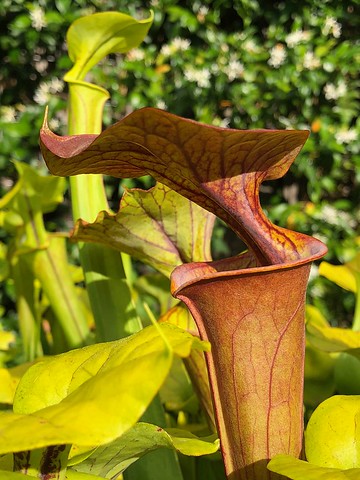
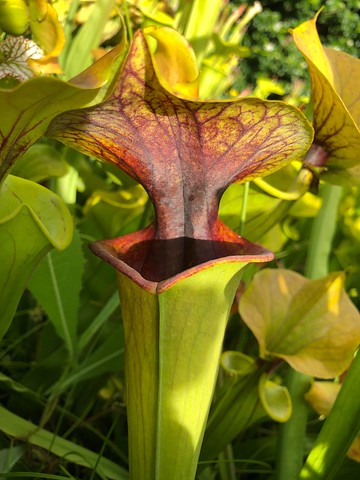
Sarracenia flava var. atropurpurea “FRT 1-1”; 2020-21 season

I have to re-start the blog with my favourite plant of course - FRT 1-1.  When newly opened, the pitchers do develop the bluish sheen seen here...

I'm also keen to not write such long blog posts, so I'll trickle feed the photos on over the next few days...

Till then...

JN.

Monday, April 22, 2019

Autumn 2019 roundup – its been hot, hot, hot!

Last time I blogged, it was quarter of a year ago and midsummer. The flava were just finishing up, and I was making a Drosera schizandra terrarium.

So then what happened?

It got hot. Seriously hot! And it stayed hot well into March, with April also being hotter than normal, but bearable. In late January, we had 10 days of maximums not below 36°C (most of the week was above 40°C!) with windy conditions, and this set everything back very badly (even though we kept water up to everything). By this time next week, we will have had our first real frosts, with the weekend set to get 1°C minimums, so autumn has been very truncated.

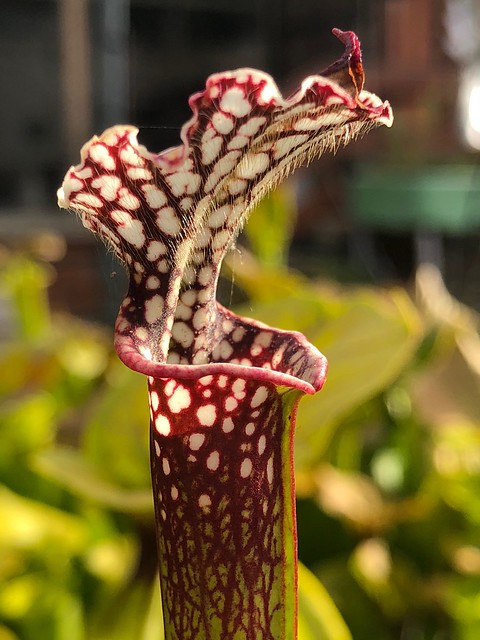
Autumn pitchers of Sarracenia leucophylla, 2018-19 season. Autumn pitchers of Sarracenia leucophylla, 2018-19 season. Autumn pitchers of Sarracenia leucophylla, 2018-19 season. Autumn pitchers of Sarracenia leucophylla, 2018-19 season.Autumn pitchers of Sarracenia leucophylla, 2018-19 season. Autumn pitchers of Sarracenia leucophylla, 2018-19 season. Autumn pitchers of Sarracenia leucophylla, 2018-19 season. Autumn pitchers of Sarracenia leucophylla, 2018-19 season.

As a result, no-one in Canberra had decent pitchers from their autumn Sarracenia (i.e. Sarracenia leucophylla and S. rubra), with the pitchers arriving in early April. Most of the pitchers we did get were tiny. I managed to get a few half-decent ones (see above), but nothing like previous years. The pitchers above are close-ups, they are not very big at all.

I’m thinking it may be a safer bet to stay with the spring peaking species like S. flava

Drosera prolifera Drosera prolifera terrarium

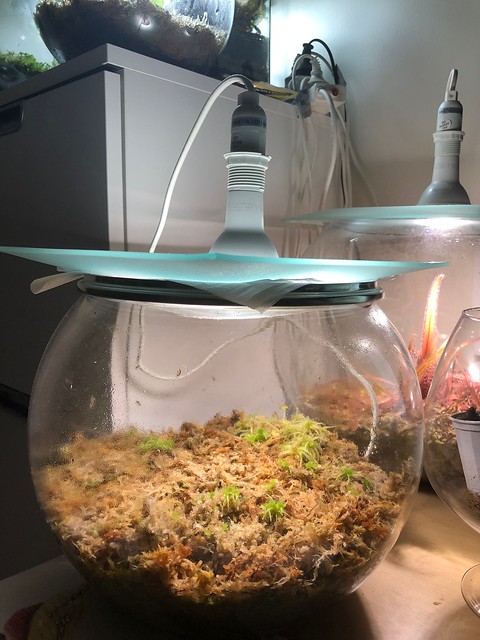
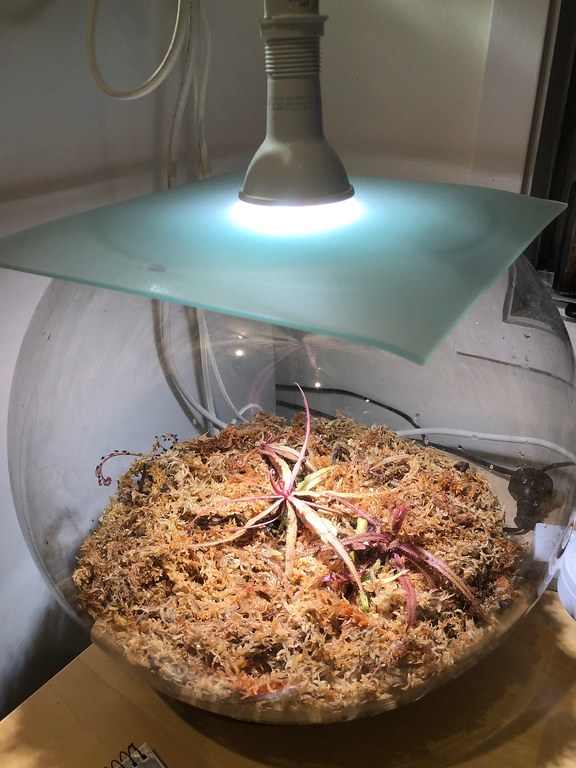
On the plus side, I managed to get the trifecta of Drosera Section Prolifera in the collection and growing successfully. The last addition was a D. prolifera via AUSCPS Canberra coordinator Barry (thanks Barry!). Its been going strong for about two months now and is putting up several leaves a week. So far, its still one plant, but I’m hoping it will be in flower by the end of winter and busily proliferating across its bowl. The setup is a slightly smaller glass bowl than the D. adelae, with a glass saucepan lid on top. I diffused the light from a 7W Vaxer lamp using a sheet of plastic foam paper (the type that manufacturers use to protect appliances when you buy them) folded into 4 layers) and a sintered glass plate, with the lamp on top.
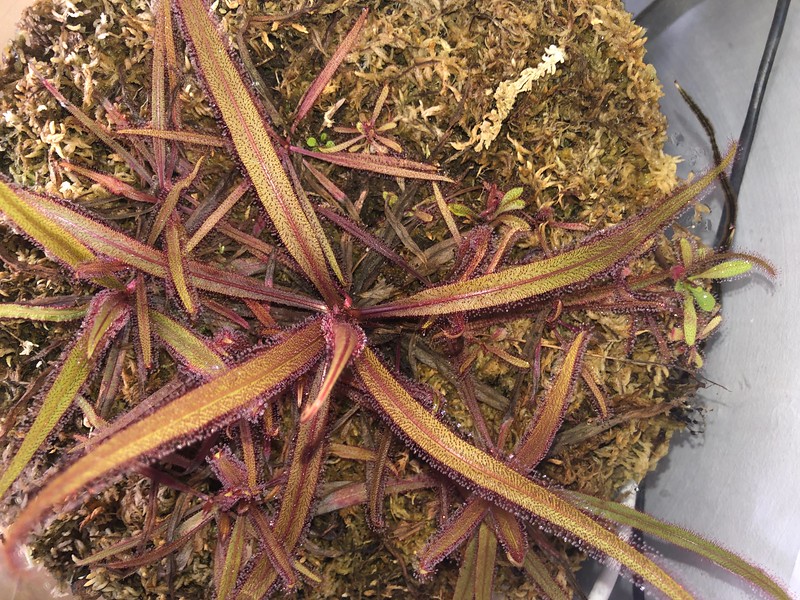
Drosera adelae terrarium

The D. adelae is also going very well, with its roots now reaching all around the bowl. There should be a huge number of pups coming up soon (guaranteed if I help by taking to the bowl with a pair of scissors!). The parent plant, which was at death’s door at the end of last winter, is now about 400 mm across! Impressive!
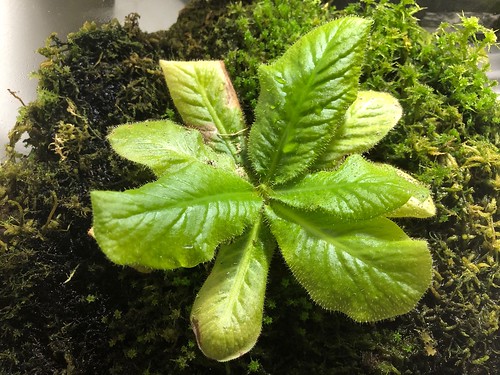
Drosera schizandra Drosera schizandra

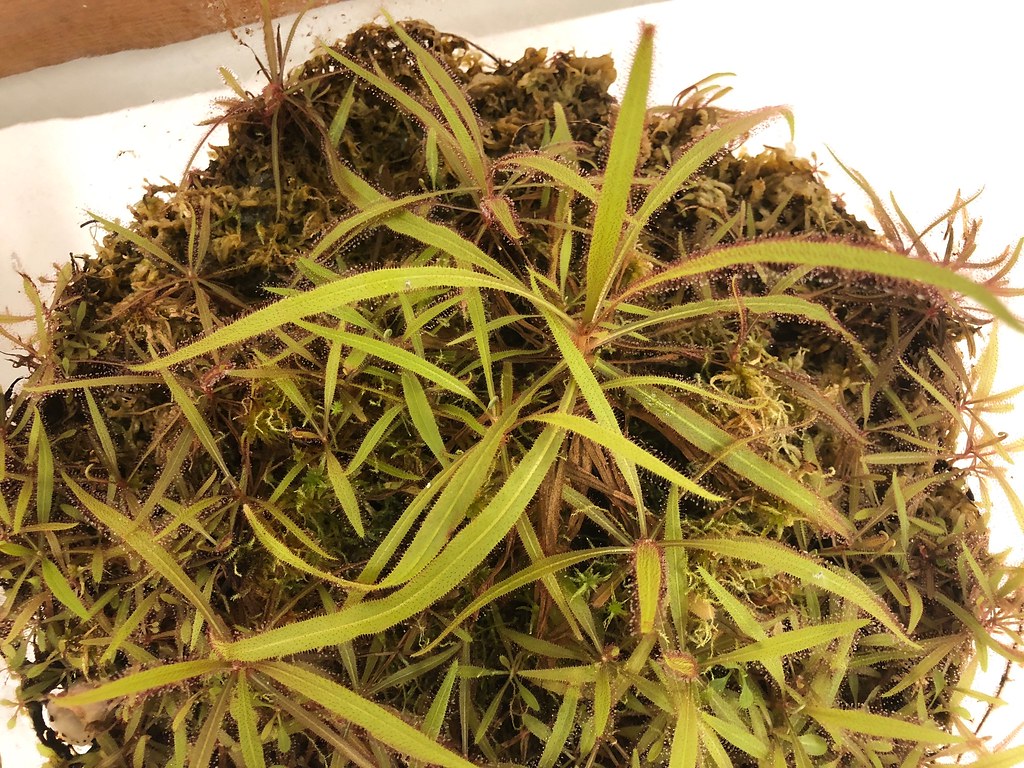
The D. schizandra terrariums have been a lot more hit and miss. The first one I set up (left) was inadvertently put in a spot where it got a hour or so of full sun daily, which set it back. Fortunately, they give you some warning before they die, so I managed to catch it and fix it up in a new spot. However, a second terrarium that was positioned better has done well, with the plant not missing a beat – its been glistening in dew continuously from when it was re-potted.

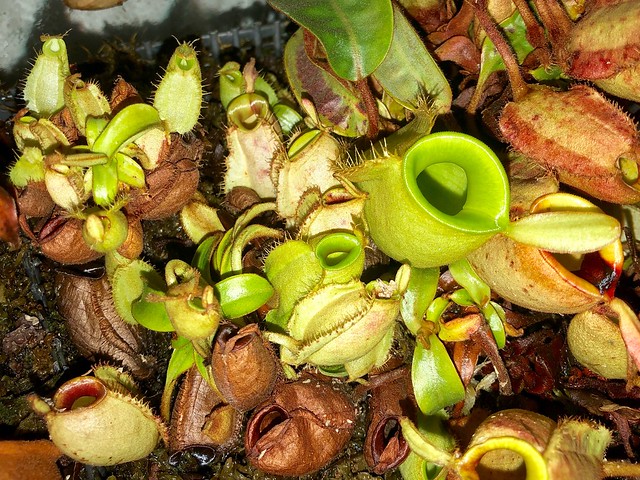
Nepenthes ampullaria terrarium Nepenthes ampullaria terrarium

The Nepenthes ampullaria and N. hookeriana terrarium was also tidied up, with the plants repotted into fresh mix. I also reduced the wattage of the lamp, replacing the 20W downlight with a 12W LED light bulb. The green form N. ampullaria responded by putting up a large pitcher a few days ago, so all good so far.
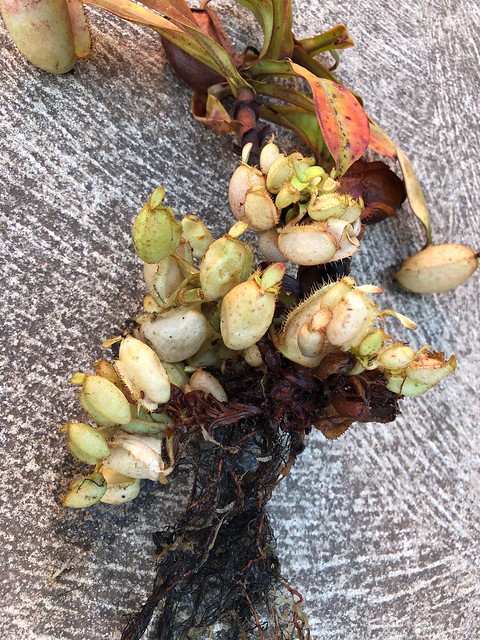
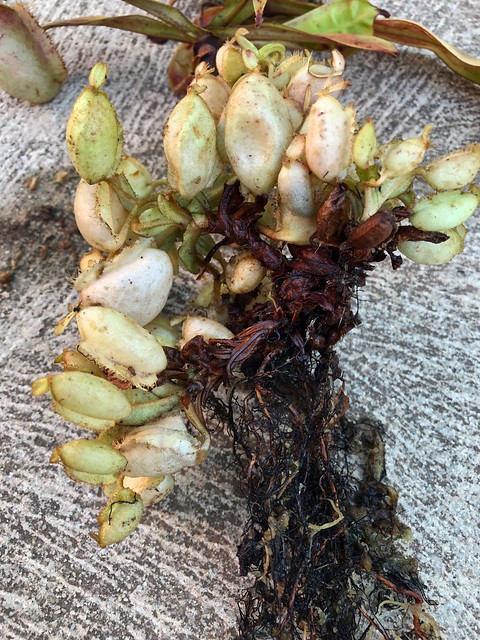
Cultivated Nepenthes ampullaria showing habit of basal pitcher production Cultivated Nepenthes ampullaria showing habit of basal pitcher production

Here’s how the green clone looked when de-potted. Note how the basal rosettes attach to the rhizome.

On the Sarracenia flava front, its repotting time. I’ve long been wondering why my flava var. rubricorpora have not been very red, and I’ve put it down to recycling peat from the bog 3 seasons ago (which would make it 6 seasons old – no wonder they weren’t happy!). I’m experimenting with a new formula of 2 peat: 1 sand: 1 scoria: 1 chopped pine needles. I’ve only managed one pot so far due to unexpected rain today, but the mix looks and feels very good. I’m hoping the scoria will help aerate the media more than using just peat, and am also hoping the pine needles will help reduce the amount of peat needed. Next time, I’ll put aside the pine needles and compost them for a full year before using it. I’m very interested in the peat-free mixes the UK growers are now using – the issue here is that the only remotely suitable material has lime added to it to increase pH, making it unsuitable for use in CP mixes (except Nepenthes – the mix I refer to is an orchid bark that I’ve used for them before with great results).

Collector’s corner display, Melbourne International Flower and Garden Show.Collector’s corner display, Melbourne International Flower and Garden Show.

I also managed to make it to Melbourne for the flower show a few weeks ago. Collector’s Corner had an impressive display with numerous CPs.

Pillar of Sarracenia x courtii; Collector’s corner display, Melbourne International Flower and Garden Show. Nepenthes x dyeriana; Collector’s corner display, Melbourne International Flower and Garden Show.

They even had a mound made entirely of S. x courtii (left)! At right is a N. x dyeriana.

Triffid Park’s display at the Melbourne International Flower Show, 2019Triffid Park’s display at the Melbourne International Flower Show, 2019Triffid Park’s display at the Melbourne International Flower Show, 2019

Triffid Park also had an impressive display too, with some beautiful Sarracenia. It was great to also have an opportunity to spend some time talking with Donna and Jason.

Red-Bodied Swallowtail (Pachliopta polydoras queenslandicus); Melbourne Zoo Butterfly House, Victoria, Australia.

And I even made it to the Melbourne Zoo, where I added a butterfly to my twitch list – the Red Bodied Swallowtail (Pachliopta polydoras queenslandicus). Its one of the few swallowtails in Australia I had not seen alive (the others being the alpine Graphium macleayanum and O. priamus macalpinei).

Cairns Birdwing (Ornithoptera euphorion); Melbourne Zoo Butterfly House, Victoria, Australia.

To close, here’s a male Cairns Birdwing butterfly (Ornithoptera euphorion), also in the Melbourne Zoo’s butterfly house.

Sunday, January 20, 2019

Making a Drosera schizandra terrarium

Setting a terrarium up for Drosera schizandra with live Sphagnum moss

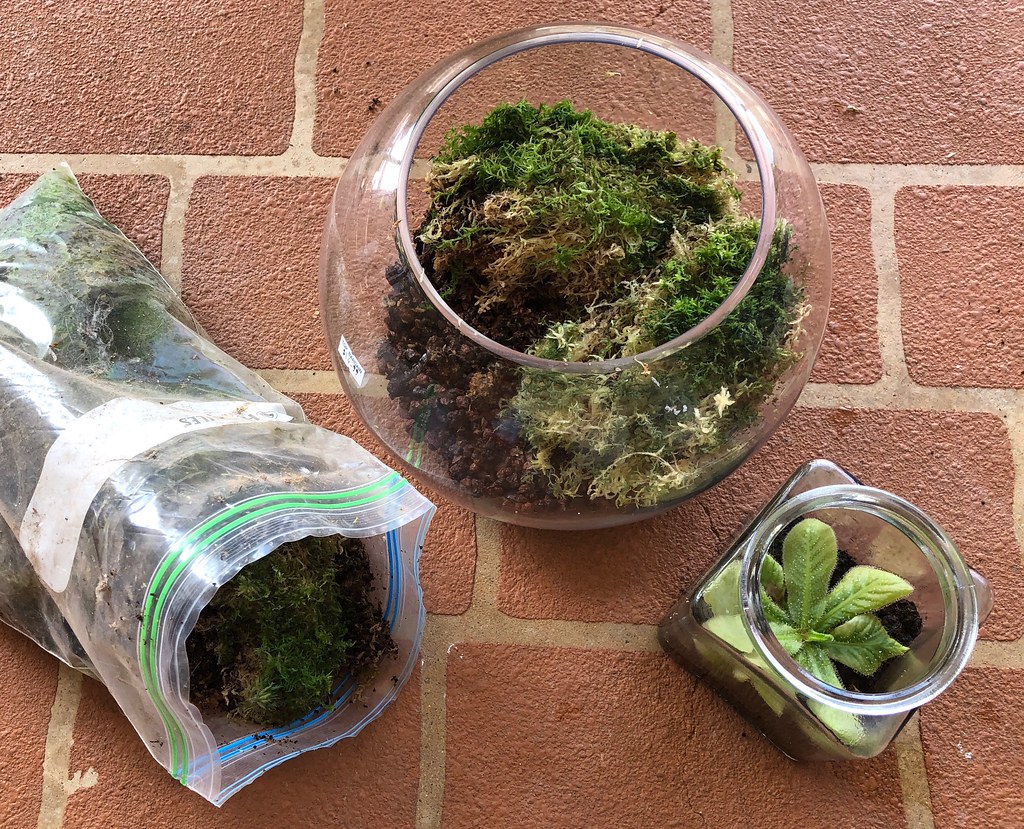
I’ve been thinking about doing a terrarium for my Drosera schizandra for some time now, and decided today was the day. The above photo shows the materials used – a 45 cm glass bowl from the local $2 shop, some washed scoria in a layer 2 cm deep in the bottom of the bowl, some leftover live Sphagnum from the Sarracenia bog gardens and of course, a D. schizandra.Finished Drosera schizandra terrarium bowl

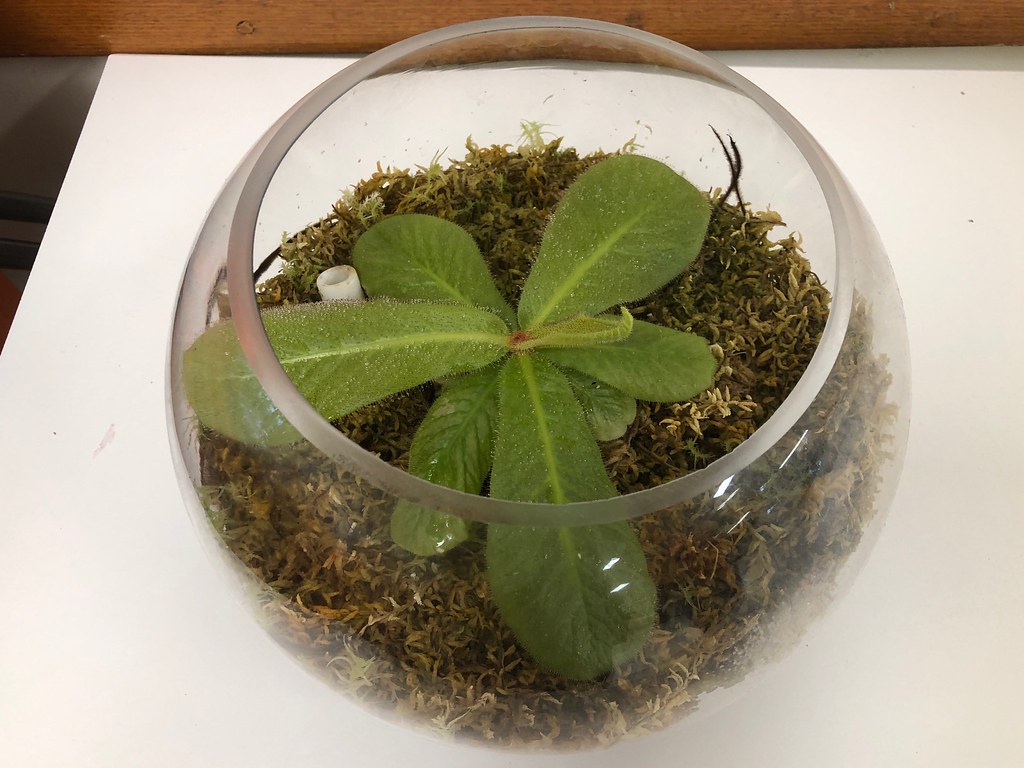
Here’s the finished product, hopefully set to grow from years to come. I had to use a hammer to break the coffee jar terrarium open, as there was no other way to get the plant out!. Setup was easy – layer the scoria, spread the root mass of the plant across the scoria and cover the roots with the Sphagnum. The finished terrarium uses a glass plate as a lid to seal in the humidity.

Here’s what I’m hoping it will grow into (the below plant is grown by AUSCPS Canberra member Barry):

Drosera schizandra grown by AUSCPS Canberra coordinator Barry Bradshaw

On the Sarracenia front – its hot and miserable outside, with Canberra breaking an all time temperature record with four consecutive days above 40C. The plants are looking pretty miserable as a result, with the red flava in particular all washed out and green. The S. leucophylla will be up next when temperatures cool down in a few weeks, so I’ll probably hibernate ‘till then for the next blog post.

Thursday, January 10, 2019

Some midsummer Sarracenia

Sarracenia collection, midsummer 2018-2019 season

Here’s a few pics of some of the nicer Sarracenia pitchers around in midsummer. At this time of year, the S. flava start to brown off with our hot weather here in Canberra, but a few of the more robust plants will keep looking good well into March. As you can see in the photo above, some of the plants more exposed to the spring-summer winds (annoyingly the S. flava var. atropurpurea) have been blown over. They and the leucophylla may have to swap spots next year… the lecuophylla flop everywhere anyway in Spring, and they won’t be as affected by the winds while providing a windbreak for the flava.

Sarracenia flava var. atropurpurea, Blackwater SF, Florida Sarracenia flava var. atropurpurea, Blackwater SF, Florida

S. flava var. atropurpurea, Blackwater SF clone, backlit (left) and front-lit (right) to show their colour. The pitcher in the right photo is on the right in the first (left) photo.

Sarracenia x moorei ‘David Martin’

S. x moorei ‘David Martin’ showing its magnificently veined and subtlety dappled hood.

Sarracenia flava var. cuprea, Gotcha! Plants heavy vein

S. flava var. cuprea, Gotcha! Plants heavy vein clone

Sarracenia flava var. cuprea ‘Ross Rowe’

S. flava var. cuprea ‘Ross Rowe’

Sarracenia flava var. atropurpurea, FRT 1-1 x Reyter’s slow clone Sarracenia flava var. maxima

S. flava var. atropurpurea ‘FRT 1-1 x Reyter’s slow clone’ (left) and S. flava var. maxima (right)

Sarracenia flava var. ornata (NSW clone) Sarracenia flava var. flava ‘Dragon’

S. flava var. ornata ‘NSW Clone’ (left) re-acquired via Owen O’Neil late last year, and a S. flava var. flava clone I’m thinking of calling ‘Dragon’ (right).

Sarracenia leucophylla ‘heavy red veined’

And to close, a red-veined S. leucophylla spring pitcher (its not quite 2.5 cm across).

The autumn leucophylla pitchers should be up in full force in late February. Until then, its a bit of a lull time for the collection as the heat of summer passes.

Wednesday, January 9, 2019

Terrariums, Pings, tropical Drosera and a Roridula at the Canberra AUSCPS meeting

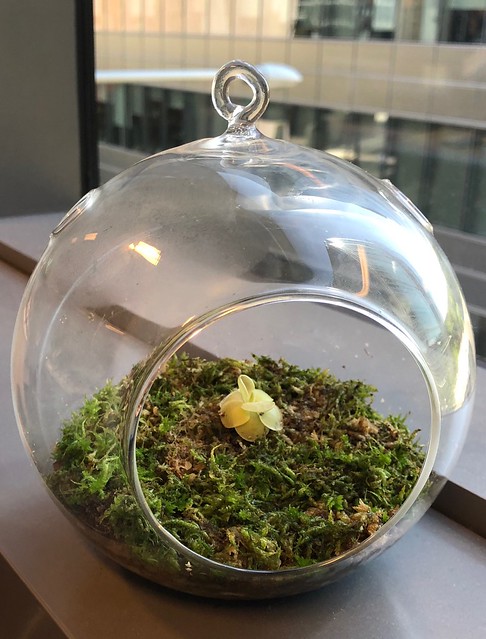
Pinguicula terrarium Pinguicula terrarium

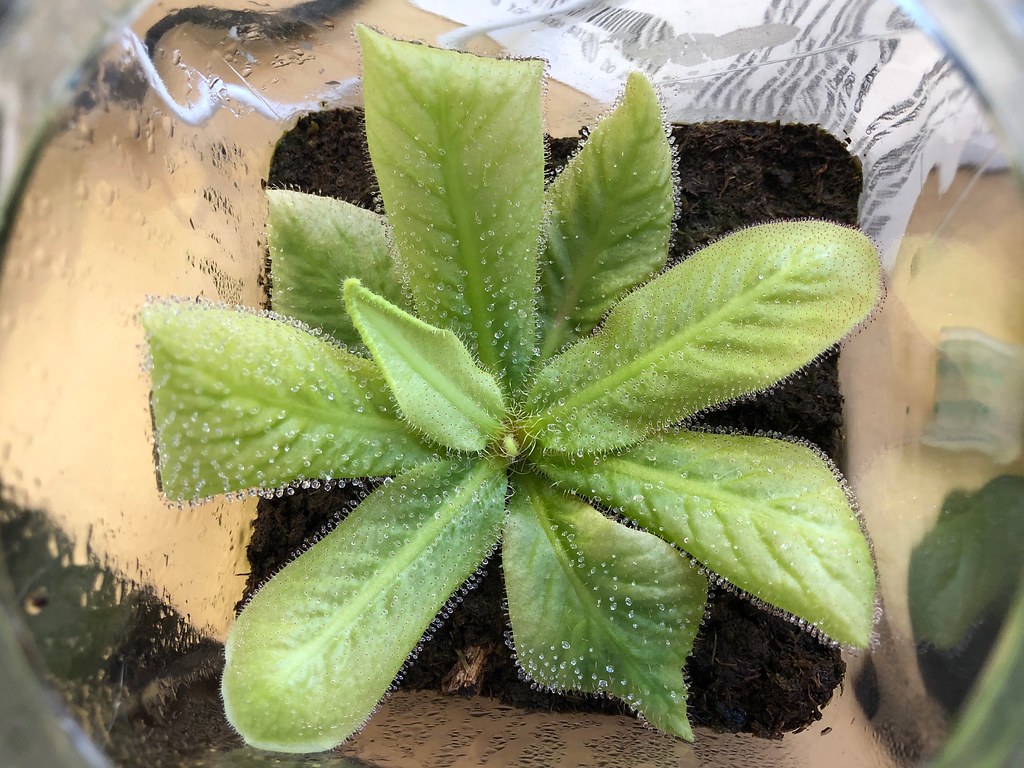
I love terrariums – the idea of creating a miniature world really draws me in, as well as being able to have nature close to you in sterile environments such as the office. While I have had Nepenthes in a terrarium on my work desk before, I decided to try Pinguicula on a bright windowsill at work using one of those el cheapo glass terrariums you can get at discount stores. I think the ventilation holes will work well for Pings.

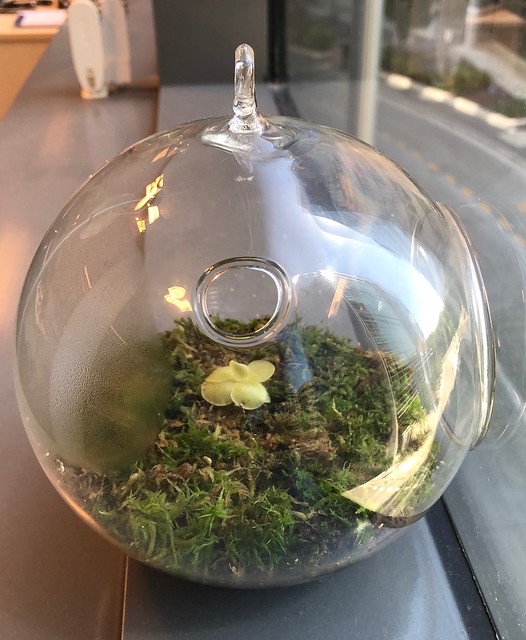
Pinguicula terrarium

I made this terrarium using a blown glass terrarium brought for $9 at a local discount shop and from some live Sphagnum scavenged from some other projects. The plant is a small Pinguicula x sethos (= P. ehlersiae x P. moranensis) that I scored at last week’s AUSCPS meeting for the princely sum of $5. I’ve grown Pings in the office previously without a terrarium, so this plant should do just fine. I have found Pings thrive in small self watering pots designed for African violets if planted in Sphagnum and placed on a bright windowsill without direct light. Unlike Drosera (see below), Pings don’t look so miserable when transplanted. If this terrarium goes well (which I am 99.99% sure it will!), I’m thinking trying P. gypsicola and P. cyclosecta, both of which I have grown well before without much effort.

Drosera adelae bowl with Ikea Vaxer 7W LED lamp

While I was at it, I finally got around to sorting out my Drosera adelae, which have recovered well from the abuse I was forced to put it through last winter. The lamp is a 7W Vaxer LED from Ikea, which works a treat. Interestingly, this clone of D. adelae produces red flowers in full sunlight, and green-white flowers in shade. I know because the last flower stalk it produced grew out of the bowl, with the same raceme producing red flowers under the lamp and green flowers on the part that poked out of the bowl. The terrarium has fogged up nicely and the plants are, well, looking miserable as they re-adjust to their new home. Based on how others have fared here with this species in an identical setup, it should bounce back and grow like crazy in the next month. Here’s how I hope it will look (this is a plant grown by an AUSCPS member, Barry):

Drosera adelae grown by AUSCPS Canberra coordinator Barry Bradshaw

On the topic of Drosera, the D. schizandra in the coffee jars continue to power along. Here’s the most robust plant, which will need its own bowl soon:

Drosera schizandra in coffee jar terrarium

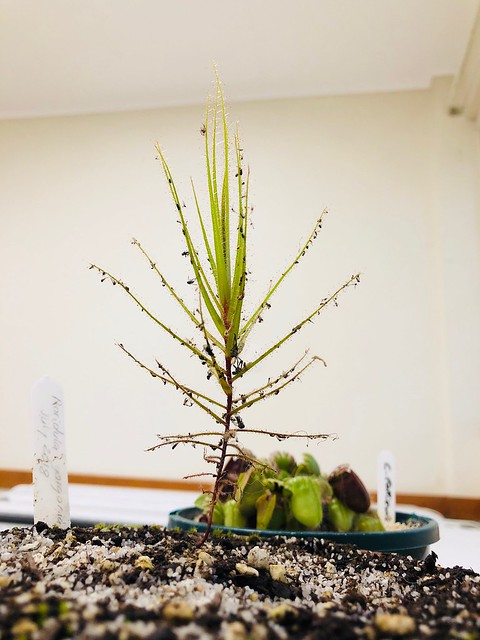
And to close, the plant of the month at the January AUSCPS meeting was this beautiful Roridula gorgonius. It was also grown by Barry, who grew it from seed brought from Allen Lowrie.

Roridula gorgonius; AUSCPS Canberra plant of the month, January 2019    Roridula gorgonius; AUSCPS Canberra plant of the month, January 2019