Showing posts with label sundew. Show all posts

Wednesday, January 9, 2019

Terrariums, Pings, tropical Drosera and a Roridula at the Canberra AUSCPS meeting

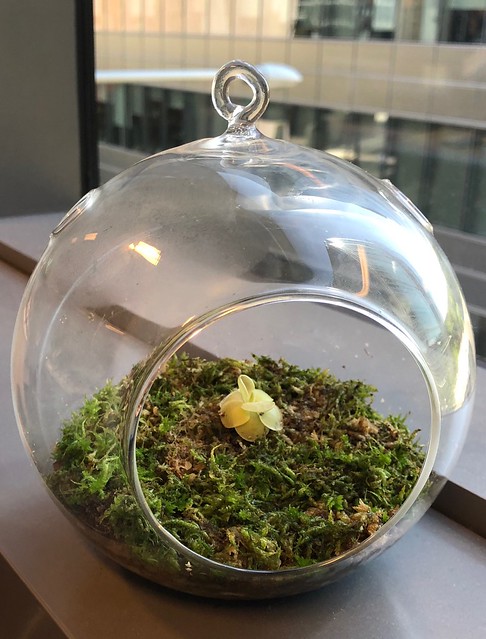
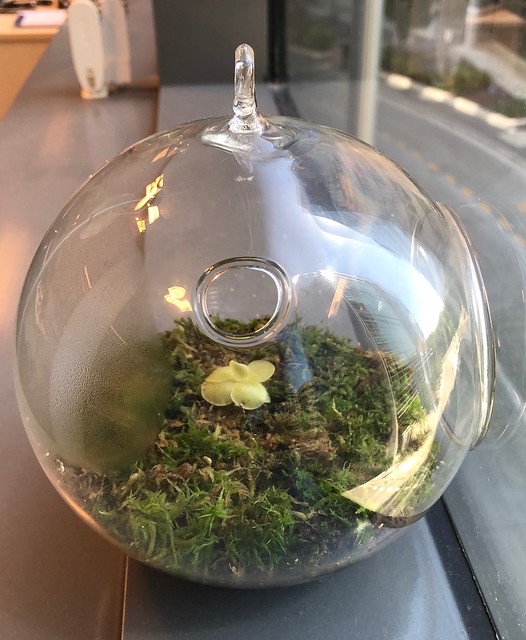
Pinguicula terrarium Pinguicula terrarium

I love terrariums – the idea of creating a miniature world really draws me in, as well as being able to have nature close to you in sterile environments such as the office. While I have had Nepenthes in a terrarium on my work desk before, I decided to try Pinguicula on a bright windowsill at work using one of those el cheapo glass terrariums you can get at discount stores. I think the ventilation holes will work well for Pings.

Pinguicula terrarium

I made this terrarium using a blown glass terrarium brought for $9 at a local discount shop and from some live Sphagnum scavenged from some other projects. The plant is a small Pinguicula x sethos (= P. ehlersiae x P. moranensis) that I scored at last week’s AUSCPS meeting for the princely sum of $5. I’ve grown Pings in the office previously without a terrarium, so this plant should do just fine. I have found Pings thrive in small self watering pots designed for African violets if planted in Sphagnum and placed on a bright windowsill without direct light. Unlike Drosera (see below), Pings don’t look so miserable when transplanted. If this terrarium goes well (which I am 99.99% sure it will!), I’m thinking trying P. gypsicola and P. cyclosecta, both of which I have grown well before without much effort.
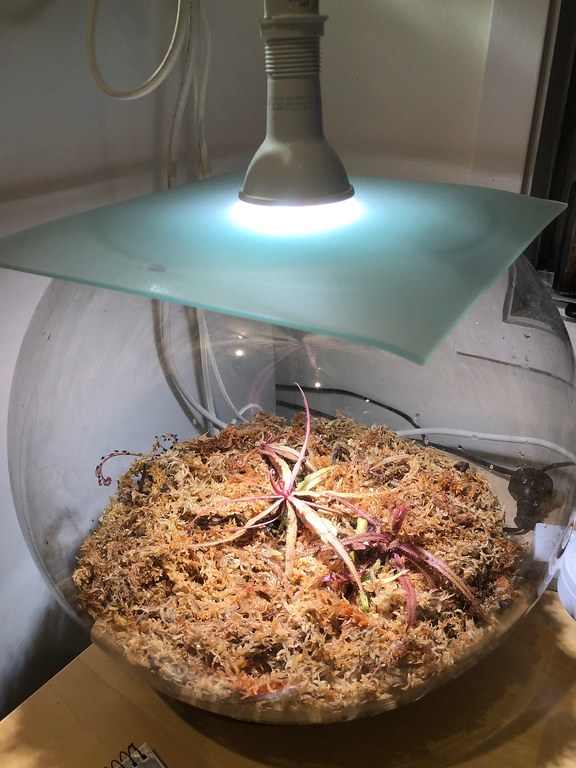
Drosera adelae bowl with Ikea Vaxer 7W LED lamp

While I was at it, I finally got around to sorting out my Drosera adelae, which have recovered well from the abuse I was forced to put it through last winter. The lamp is a 7W Vaxer LED from Ikea, which works a treat. Interestingly, this clone of D. adelae produces red flowers in full sunlight, and green-white flowers in shade. I know because the last flower stalk it produced grew out of the bowl, with the same raceme producing red flowers under the lamp and green flowers on the part that poked out of the bowl. The terrarium has fogged up nicely and the plants are, well, looking miserable as they re-adjust to their new home. Based on how others have fared here with this species in an identical setup, it should bounce back and grow like crazy in the next month. Here’s how I hope it will look (this is a plant grown by an AUSCPS member, Barry):
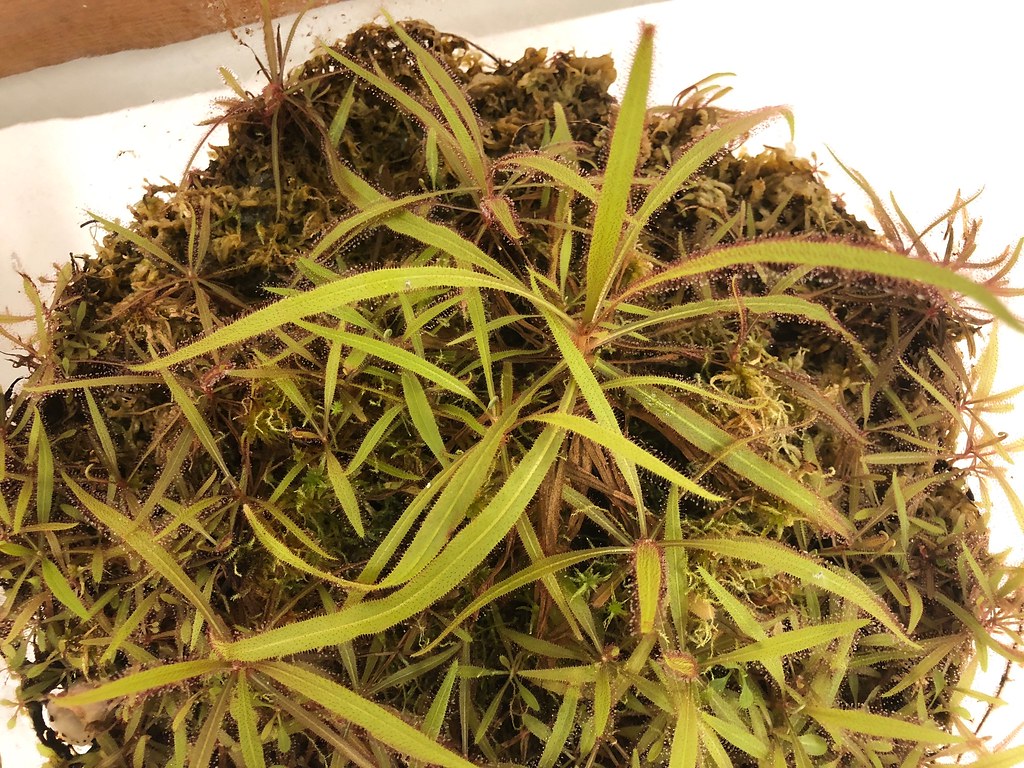
Drosera adelae grown by AUSCPS Canberra coordinator Barry Bradshaw

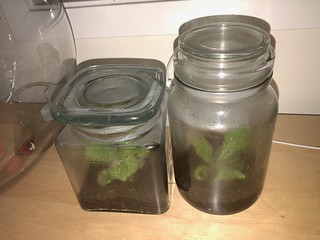
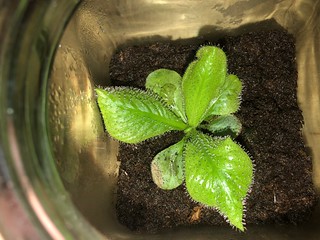
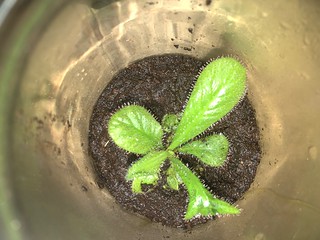
On the topic of Drosera, the D. schizandra in the coffee jars continue to power along. Here’s the most robust plant, which will need its own bowl soon:
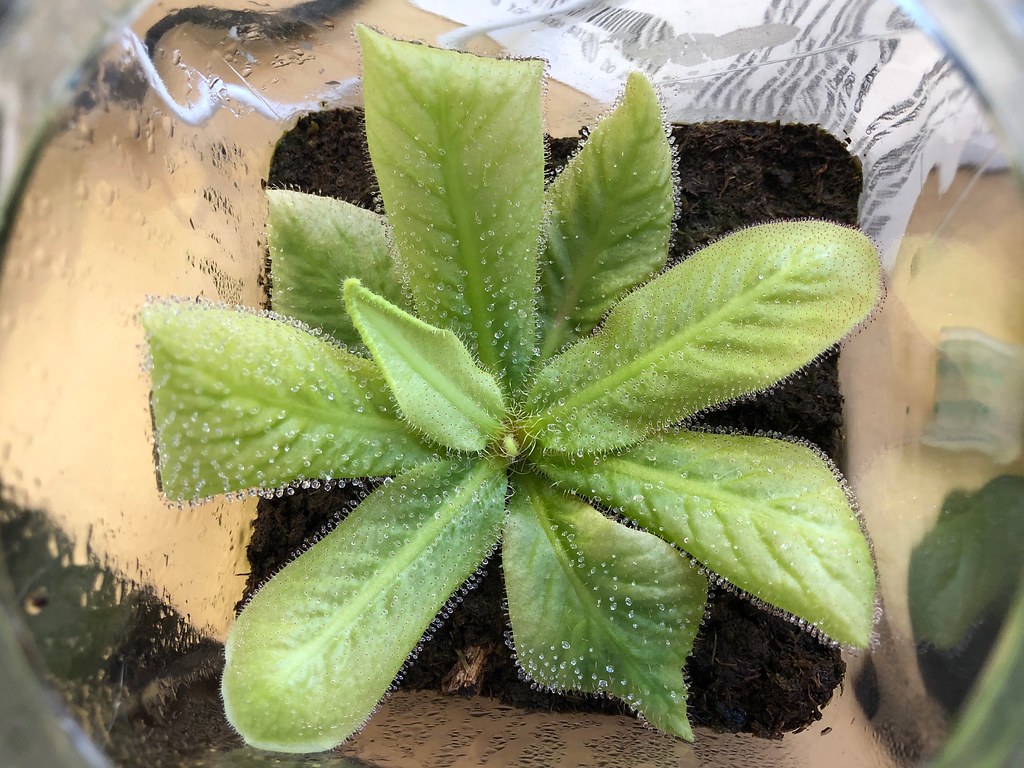
Drosera schizandra in coffee jar terrarium

And to close, the plant of the month at the January AUSCPS meeting was this beautiful Roridula gorgonius. It was also grown by Barry, who grew it from seed brought from Allen Lowrie.
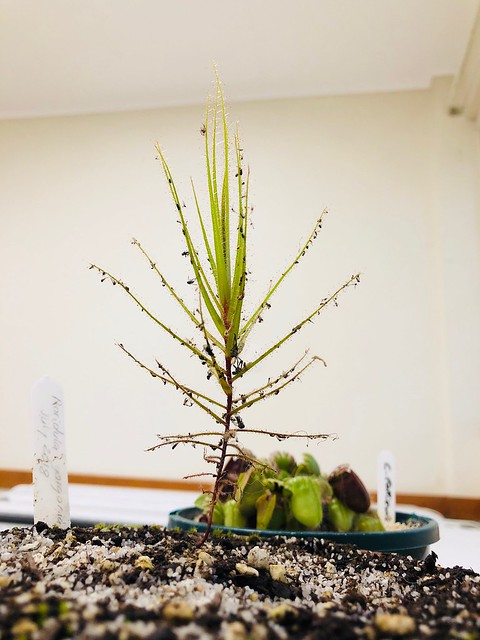
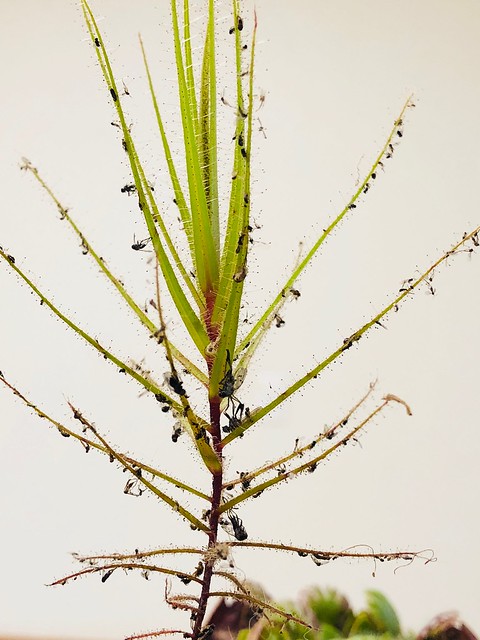
Roridula gorgonius; AUSCPS Canberra plant of the month, January 2019    Roridula gorgonius; AUSCPS Canberra plant of the month, January 2019

Thursday, October 25, 2018

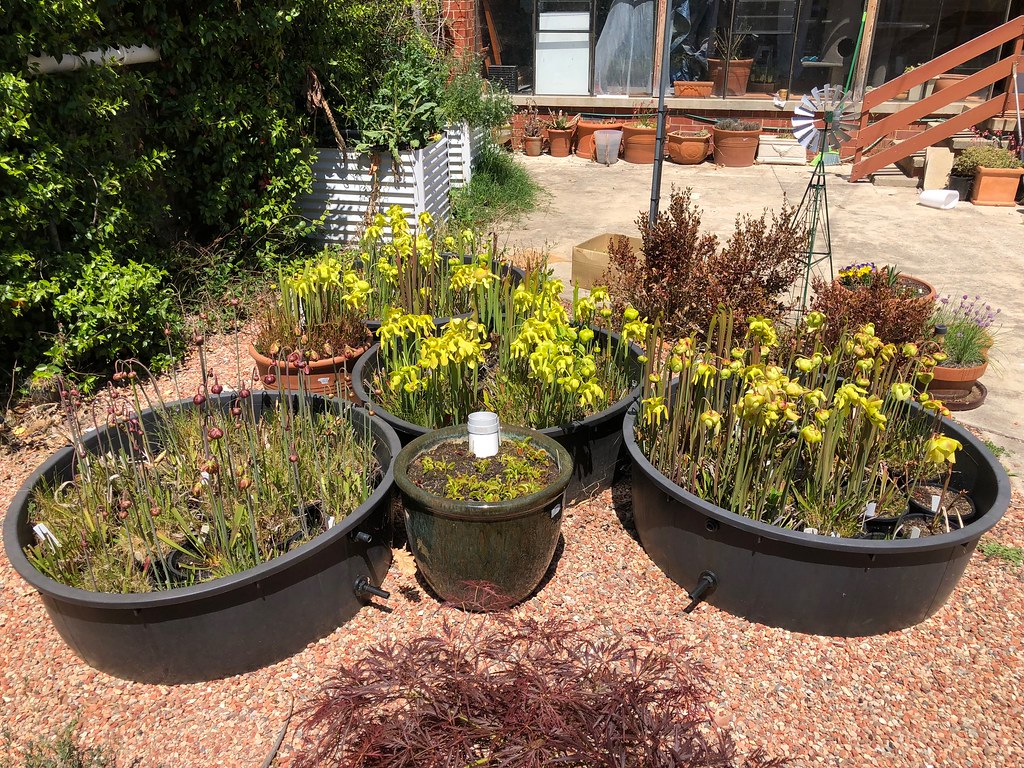
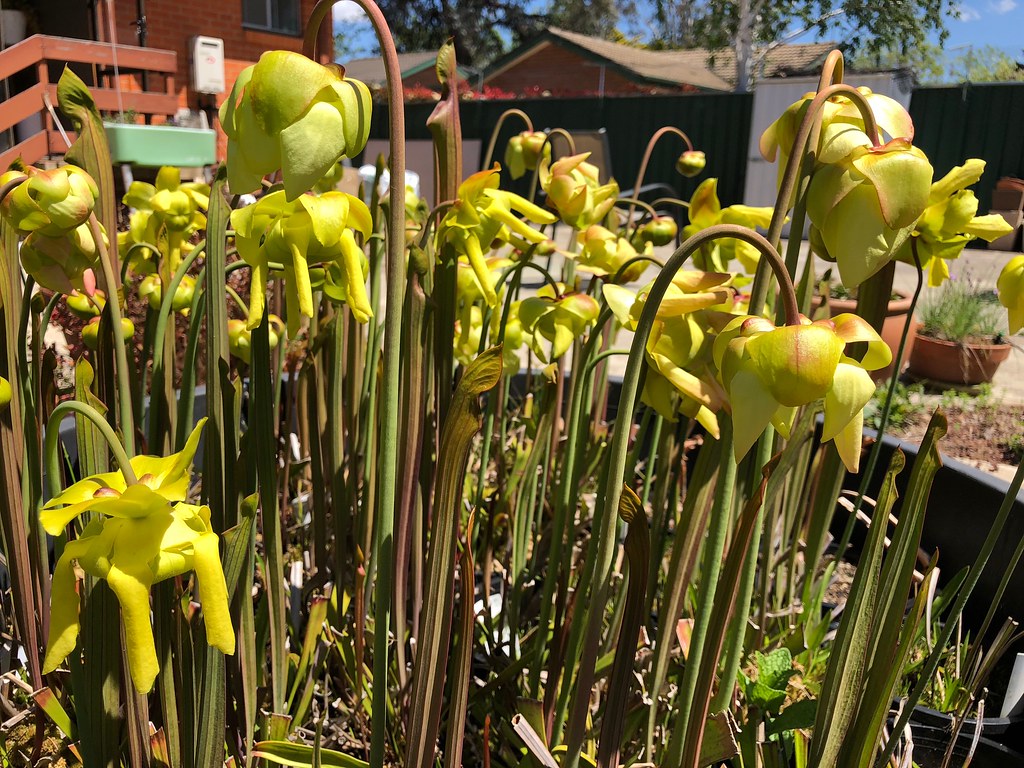
The Sarracenia flava collection in full bloom

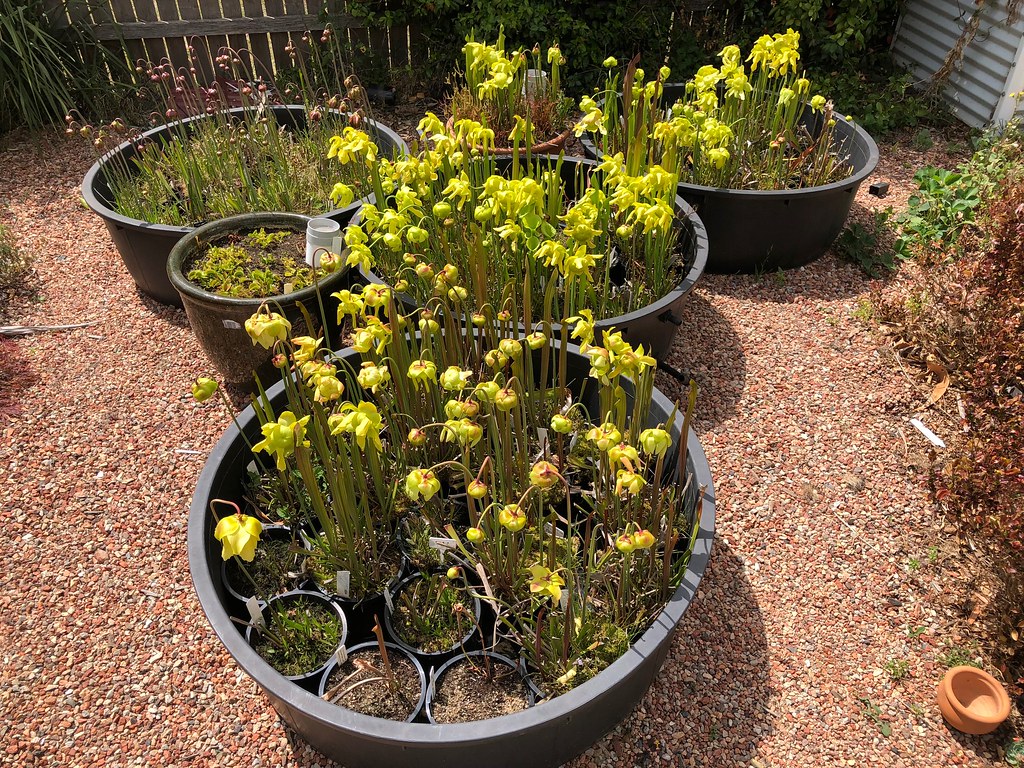
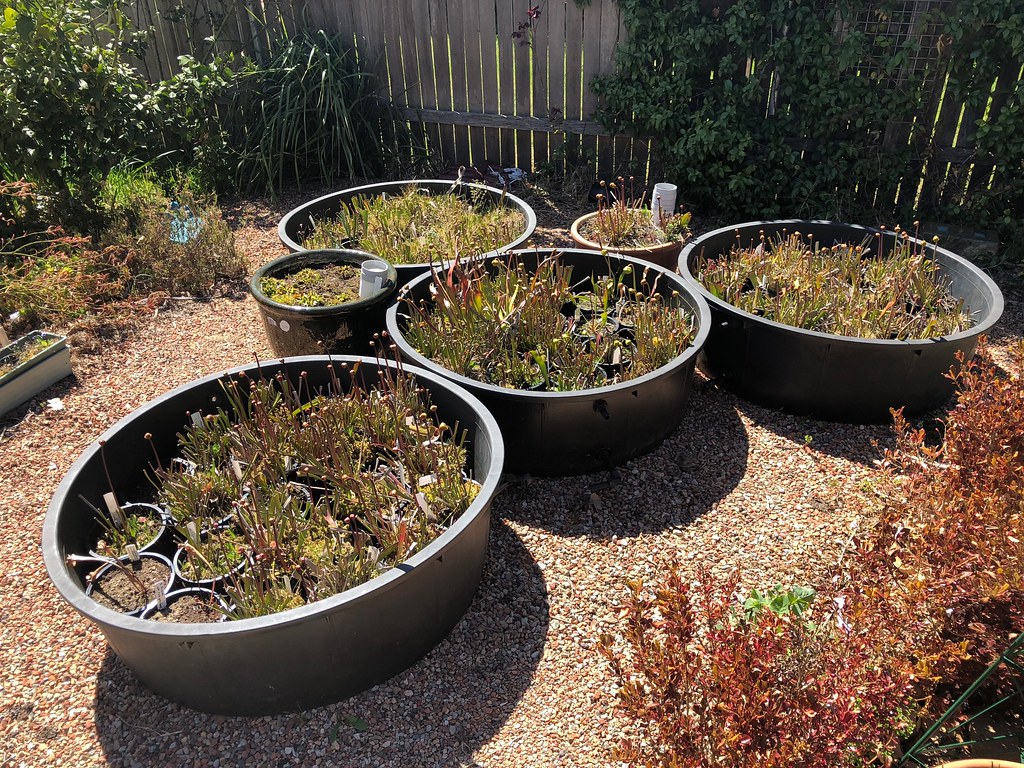
Sarracenia collection in flower, 2018-2019 season

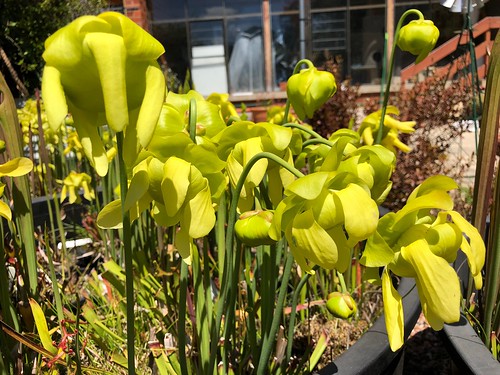
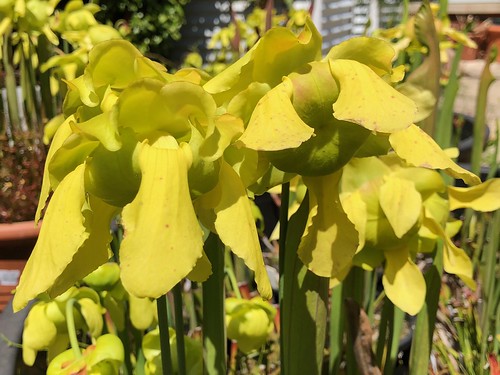
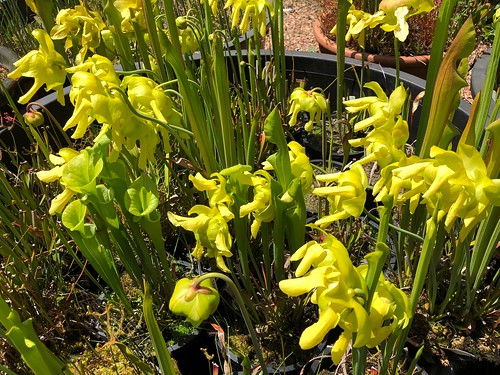
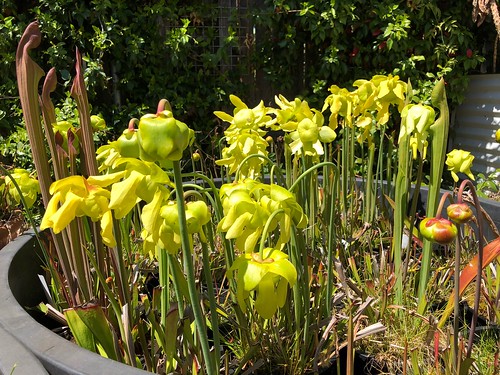
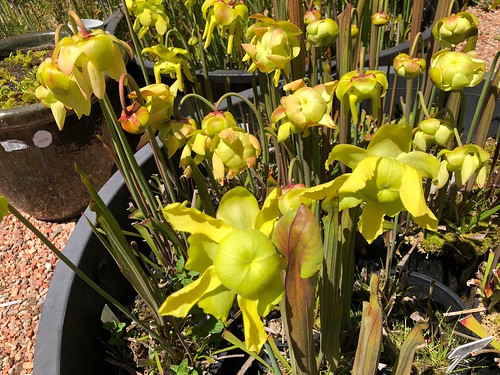
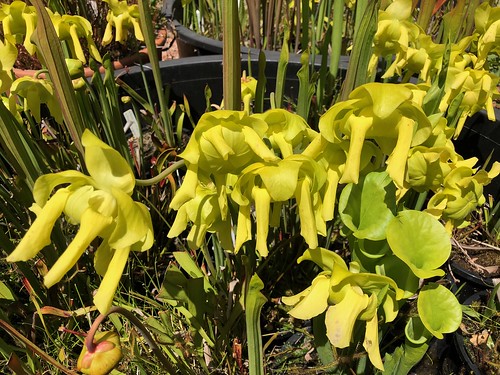
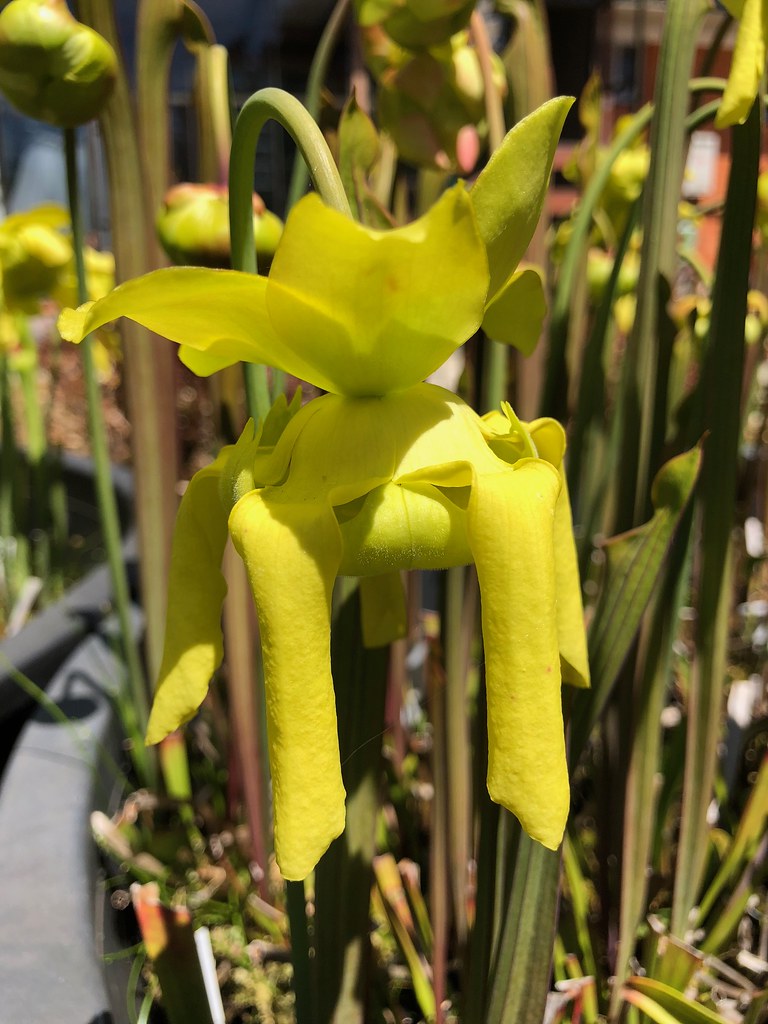
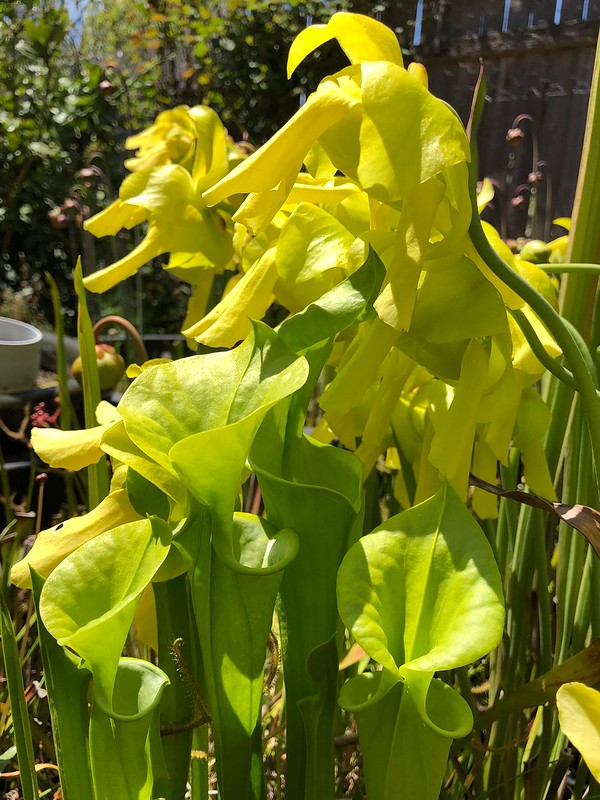
The Sarracenia flava have hit their peak of flowers for this year, and they look spectacular! Here’s some blooms from assorted plants:

Sarracenia flava in flower, 2018-2019 season Sarracenia flava in flower, 2018-2019 season

Sarracenia flava in flower, 2018-2019 season Sarracenia flava var. rubricorpora in flower, 2018-2019 season

Sarracenia flava var. atropurpurea in flower, 2018-2019 season Sarracenia flava in flower, 2018-2019 season

Sarracenia collection in flower, 2018-2019 season

These photos are actually showing the collection past its peak (25 October), as some petals were already starting to fall. As luck would have it, I was away with work when the peak came (I suspect Tuesday was the actual peak).

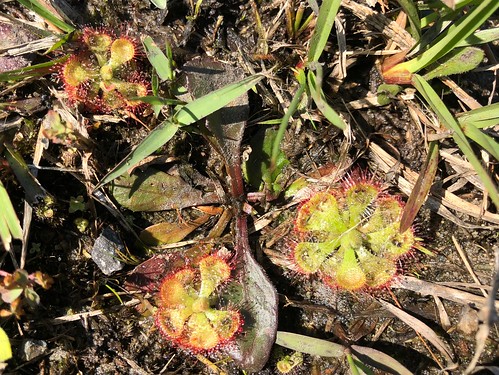
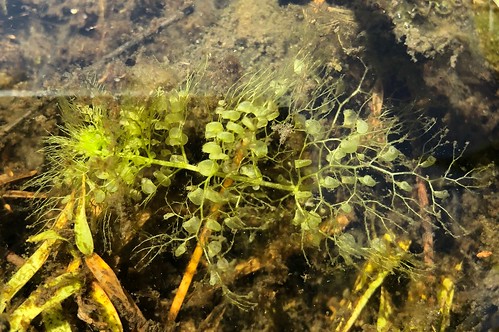
Drosera burmannii; Newcastle Airport, NSW. Utricularia australis; Newcastle Airport, NSW

As a small consolation, I managed to find nice populations of Drosera burmannii and Utricularia australis where I was near Newcastle, NSW. Incidentally, the plants of D. burmannii I brought from an AUSCPS member last year self-sowed enough seed that I should have a lovely carpet of them shortly in the VFT pot.

Drosera burmannii seedlings with VFT

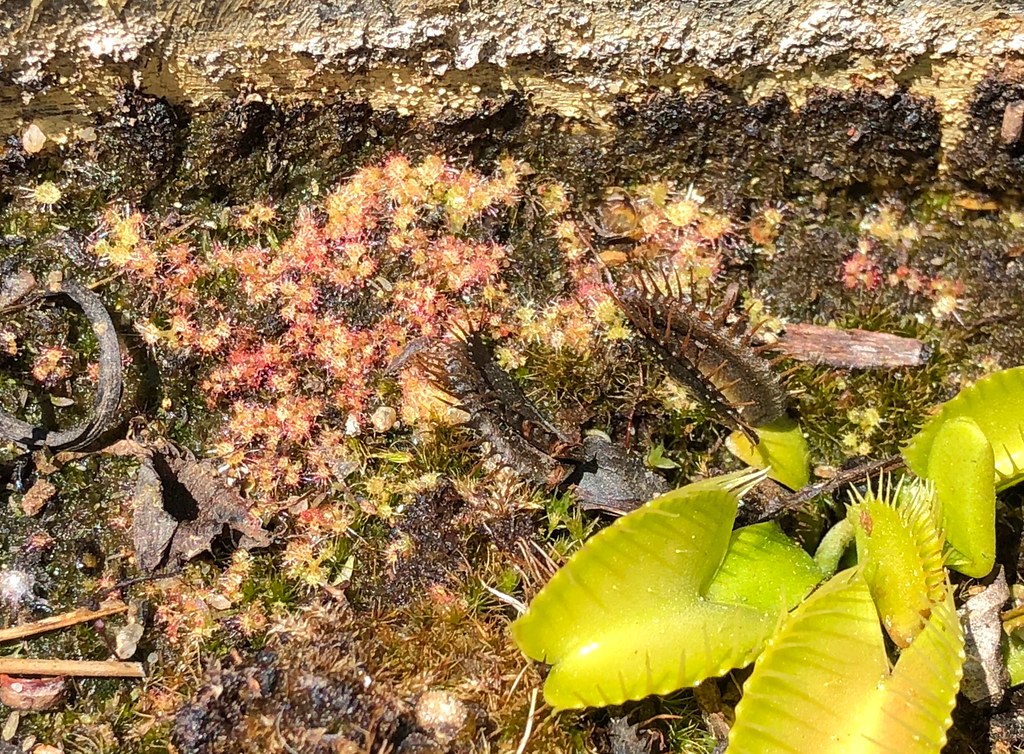
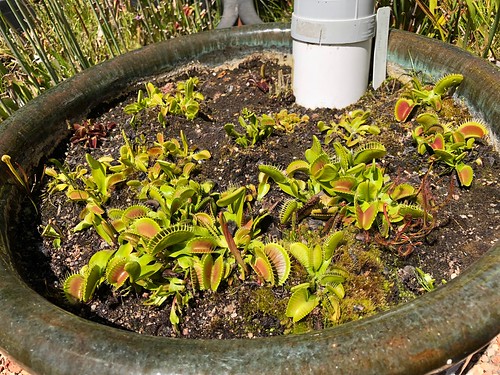
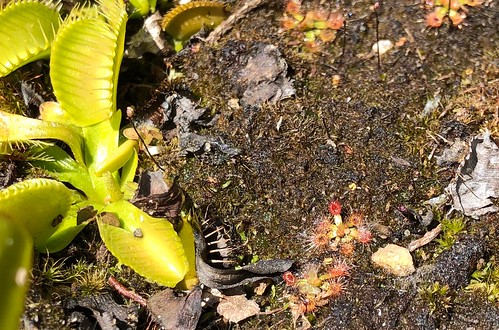
Speaking of which, the VFT collection has also done well and is emerging from dormancy. I’ve been busy nipping flower stalks off – I’ve never managed to get seed to set from my flytraps. Some Drosera pulchella gemmae I got off ebay Australia have also produced a goodly number of plants that are getting bigger, and each week I find a couple more between the flytraps. I’ll get the macro lens out and get some close-up shots of them soon.

Venus’ flytrap collection, Spring 2018 Drosera pulchella and Dionaea muscipula

Yesterday, I got in and pollinated as many S. flava flowers as I could. I selfed most things, but made a few strategic crosses. One was between two very nice S. flava var. cuprea clones, one from Gotcha! Plants and another from a local grower, Ross Rowe.

Sarracenia flava var. atropurpurea in flower, 2018-2019 season

The other was a forward and reverse cross between S. flava var. atropurpurea from Blackwater State Forest, Florida (this is the first year that clone has flowered for me) and the atropurpurea clones FRT 1-1 and FRT 1-5. Here’s a photo of the Blackwater SF clone’s flower:

Sarracenia flava var. atropurpurea (Blackwater S.F.) in flower, 2018-2019 season

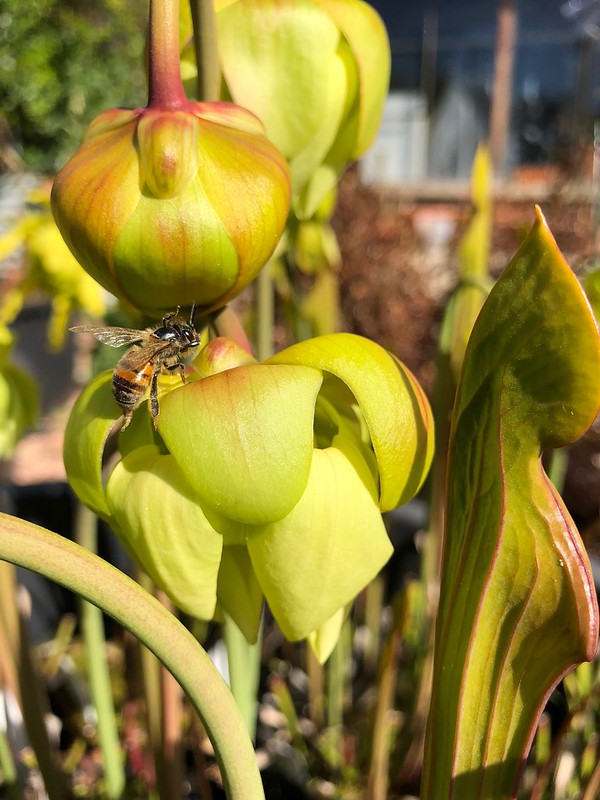
One thing that I haven’t seen before this year is the honeybees taking an interest in the flowers. They seem to be efficient pollinators, as they enter the flowers via the stigma and thoroughly dusted in pollen. The below bee is not so covered, as she is a little de-fuzzed (setulae rubbed from the scutum) and probably did not pick up any pollen from the stamens as a result. Hopefully, they haven’t messed up my crosses…

Sarracenia flava var. atropurpurea with honeybee taking off after a probable pollination visit

The first pitchers have opened too, with S. flava var. maxima from Honeysuckle Road, Harleyville, NC beating out a pot of S. flava var. atropurpurea by a few days.

Sarracenia flava var. maxima (Honeysuckle Road, Harleyville, NC) in flower, 2018-2019 season

Saturday, October 6, 2018

Rise of the Sarracenia flowers, a second try at Drosera schizandra and the Nepenthes ampullaria terrarium

Sarracenia flower buds rising, 2018-2019 season

The Sarracenia are preparing for another beautiful show of flowers. I did a quick head count this morning – 263 buds emerged and rising – which makes for a bumper year. The first flower looks to be about two weeks out still. I’m thinking of getting the pollination brushes out and doing some crosses. To make it easy, the plan is to self everything. Fortunately, the leucophylla almost always open up after the flava are done, so the chance of interspecies hybridisation is low.

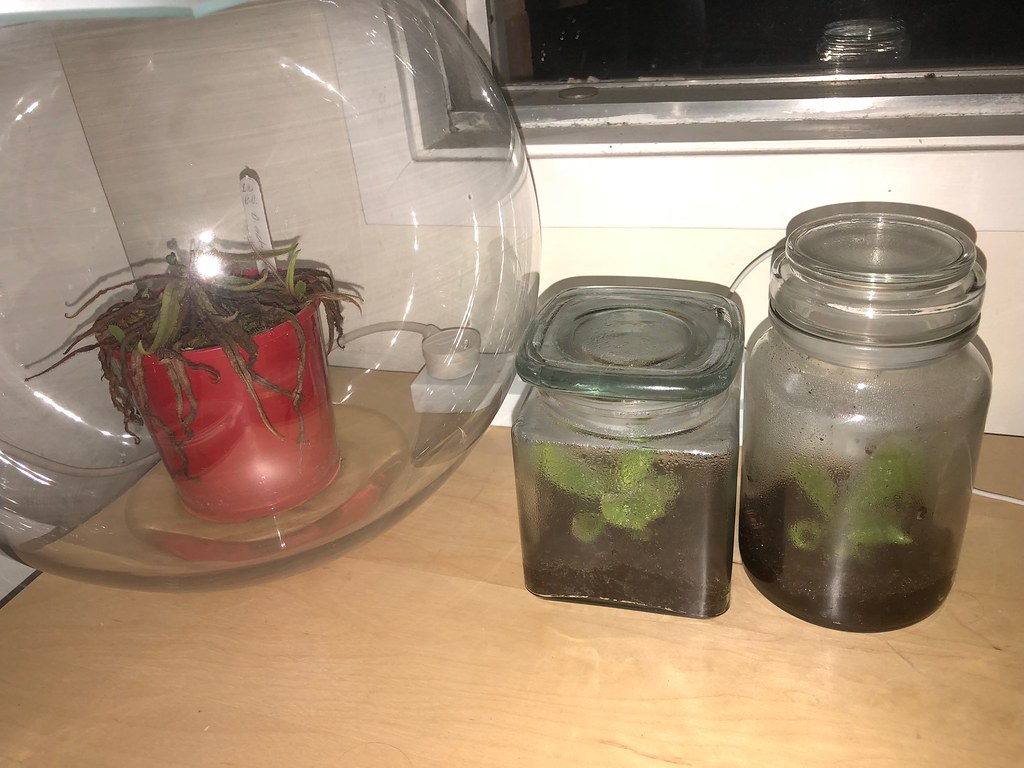
Drosera schizandra terraria Drosera schizandra in coffee jar terrarium Drosera schizandra in a coffee jar terrarium

Last night was the October AUSCPS Canberra ground meeting, which had an emphasis on Pinguicula. I had an unexpected score – Dave Colburn from Sydney brought down some Drosera schizandra, a long-time favourite of mine and a plant I’ve only had the chance to try once. I currently have two coffee jar terrariums on my desk, getting indirect light through a north-facing window (southern hemisphere, so sun is to the north) and each growing a decent sized plant. Another AUSCPS member here grows D. schizandra to very large size, so I will have to take a look at his growing conditions.

On a sad note, the friend who accompanied me to try and find D. schizandra in the wild – Bob Miller – passed away a couple of months back. He was a very good friend who will be sorely missed.

Terraria for two of the Three Sisters - Drosera adelae & Drosera schizandra

Next to the D. schizandra is a large bowl holding a pot of D. adelae. The D. adeale are not especially happy (the spot they thrived last summer is not available at the moment) but that they are alive is still cause for celebration – I have lost D. adelae to the cold most years I’ve been in Canberra. Lack of light seems to be the problem (but I’m hoping this means there will be enough light to make D. schizandra happy). If it can hang in there a bit longer, it will get its old spot back and hopefully thrive again.

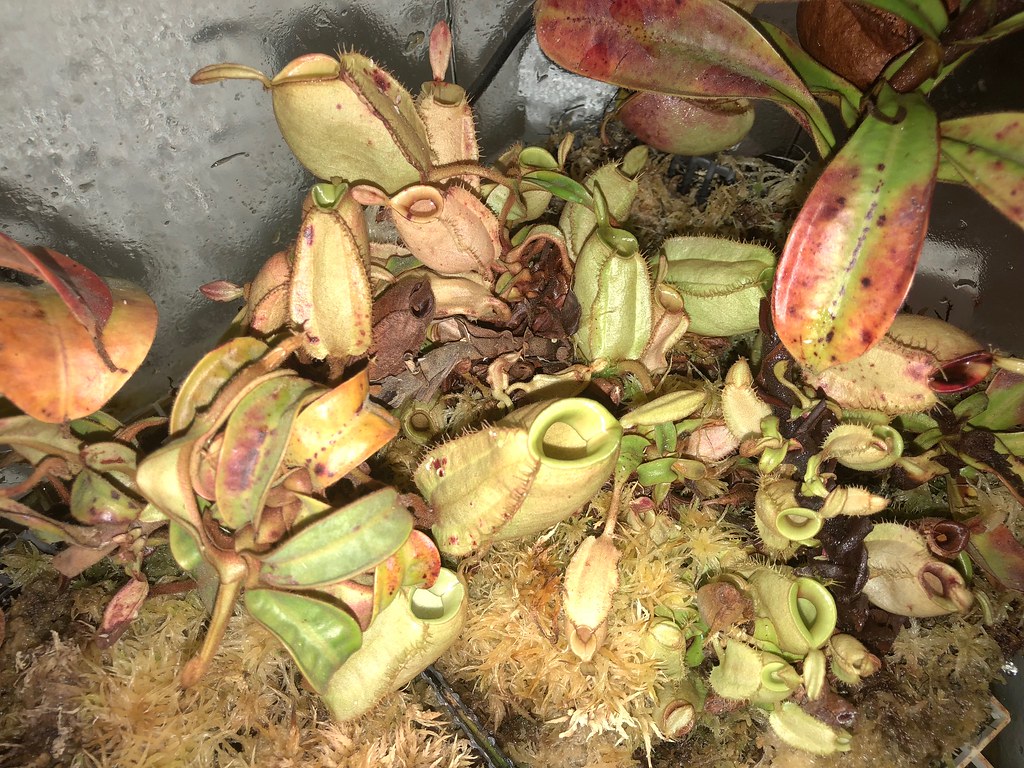
Terrarium grown Nepenthes ampullaria

There is another terrarium in my office, and it contains one plant each of Nepenthes ampullaria ‘green’, N. ampullaria ‘red’ (not that it gets very red!) and N. x hookeriana. The plants are doing very well, but the light has consistently been burning their leaves (and has bleached out the Sphagnum!). That said, both the N. ampullaria have been producing ground rosette pitchers, some aerial rosettes and decent sized lower pitchers. The light I’ve been using is a 20W LED floodlight producing 2000 lumens, mounted 20 cm above the plants. I’m now thinking of trying either a 15W floodlight (but the local Bunnings are out of stock), a 24W compact fluoro (which has worked for me before) or two of the Ikea grow lamps. All of these options get me to about 1400-1600 lumens, which should help reduce leaf burn. The plants grow above a heated water bath, which produces if anything too much humidity (the pots are too wet and I don’t water them – I just top up the water bath). I might need to put down a coir basket liner under the pots to trap more of the humidity in the water bath while I’m messing with the lights.

Tuesday, September 19, 2017

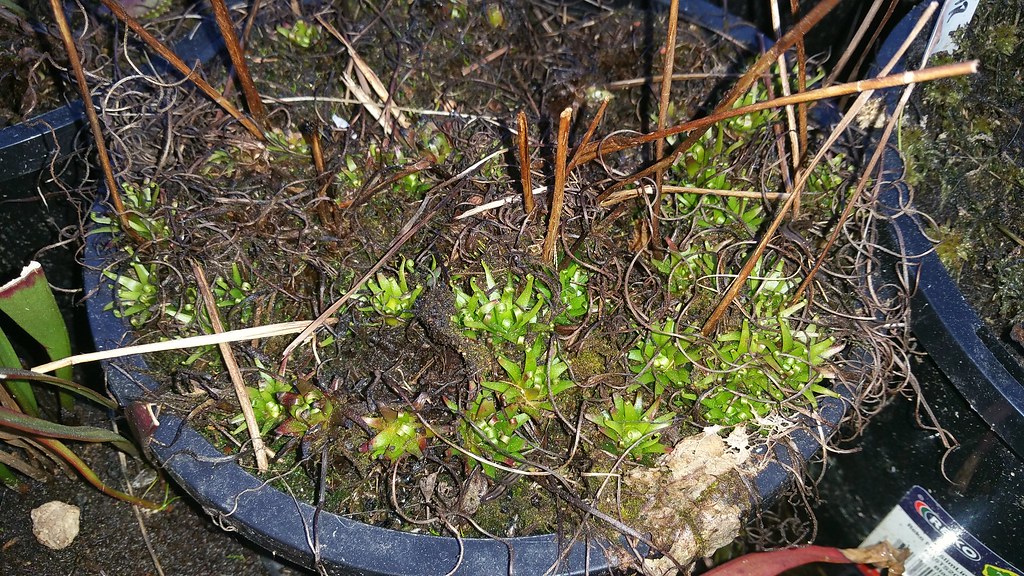
Drosera filiformis ssp. filiformis gearing up

I love Drosera, but not so many do very well with our cold temperatures. The typical and alba forms of Drosera capensis do well, but the red and broad leaf forms quickly departed. Drosera slackii went backwards steadily until I took pity on them and gave them to a friend in Sydney. Drosera nidiformis and D. burmanni hung on in small numbers for a long time, but eventually petered out. Drosera pygmaea did really well, but disappeared after the bog gardens went back to pots. Drosera rotundifolia also did well, but again I nearly lost them putting them into pots - their winter resting buds were hard to find while I repotted in the dark. That said, there is a new leaf visible in a photo on the blog post above (after) this one – check the photo with the bees.

Perhaps the best performing Drosera I've grown outdoors here are Drosera filiformis ssp. filiformis and Drosera binata (all forms of the latter are very reliable). Drosera filiformis is something that looks amazing when grown en masse, so I have a 200 mm pot crammed with it. Here's a photo of that pot just breaking dormancy:

Drosera filiformis ssp. filiformis breaking dormancy