Showing posts with label atropurpurea. Show all posts

Thursday, October 25, 2018

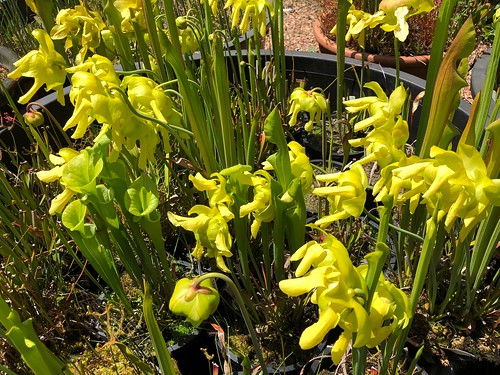
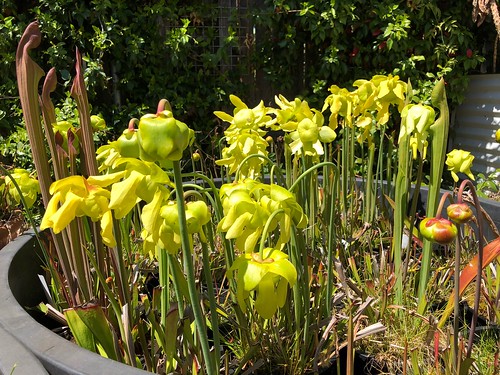
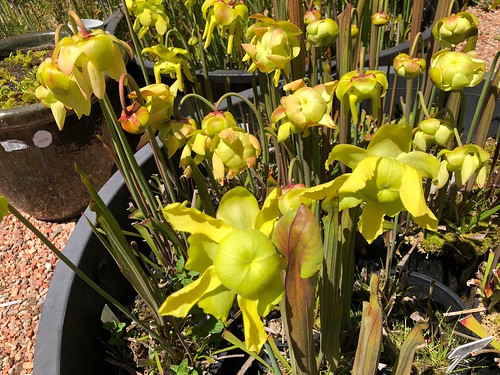
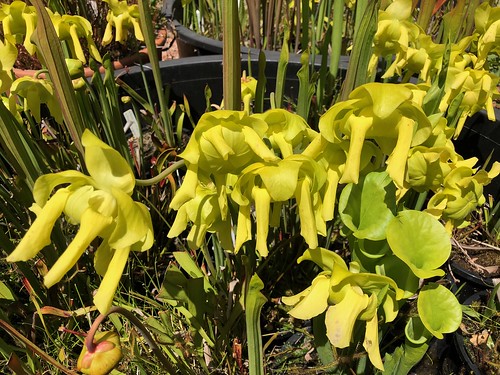
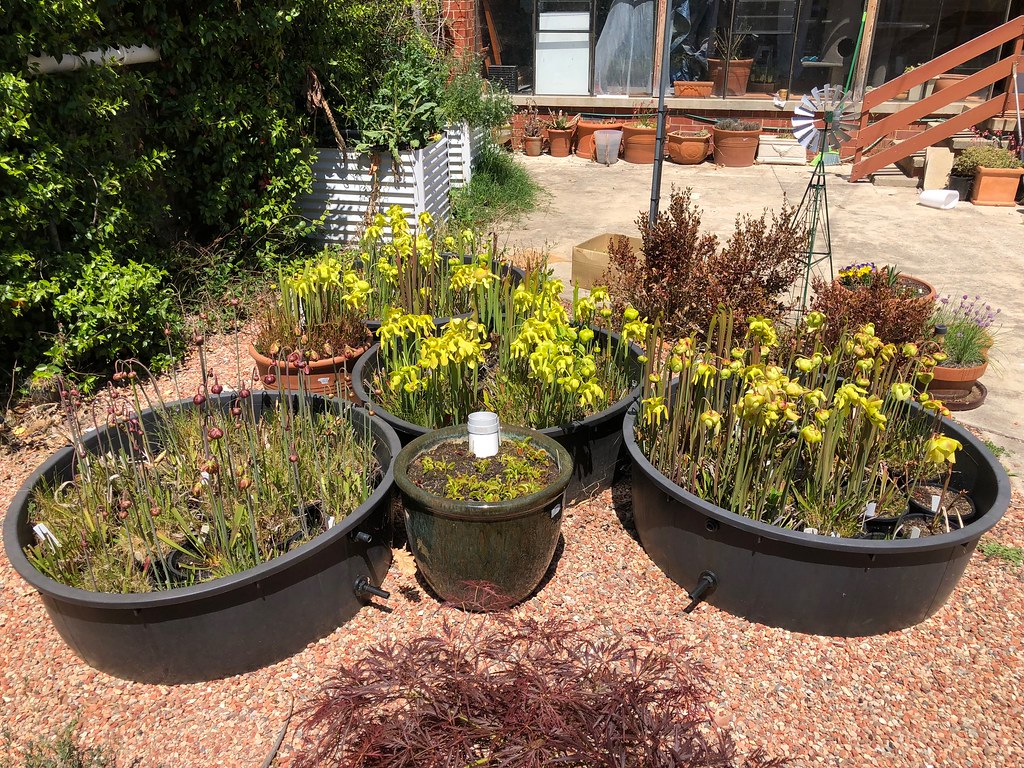
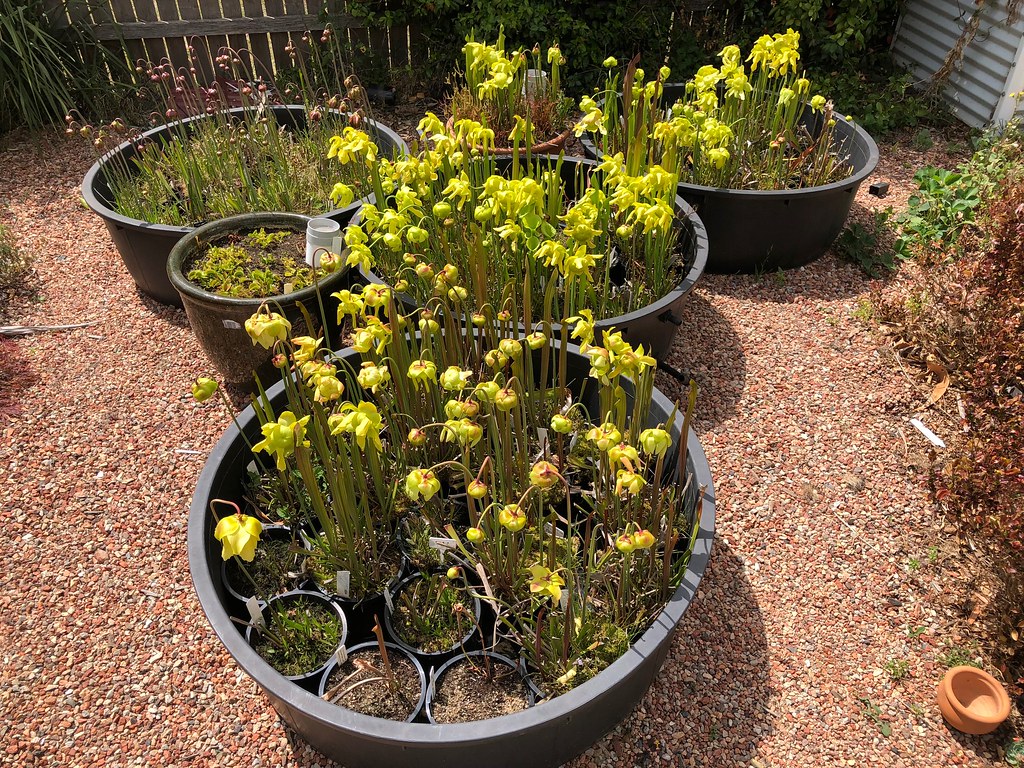
The Sarracenia flava collection in full bloom

Sarracenia collection in flower, 2018-2019 season

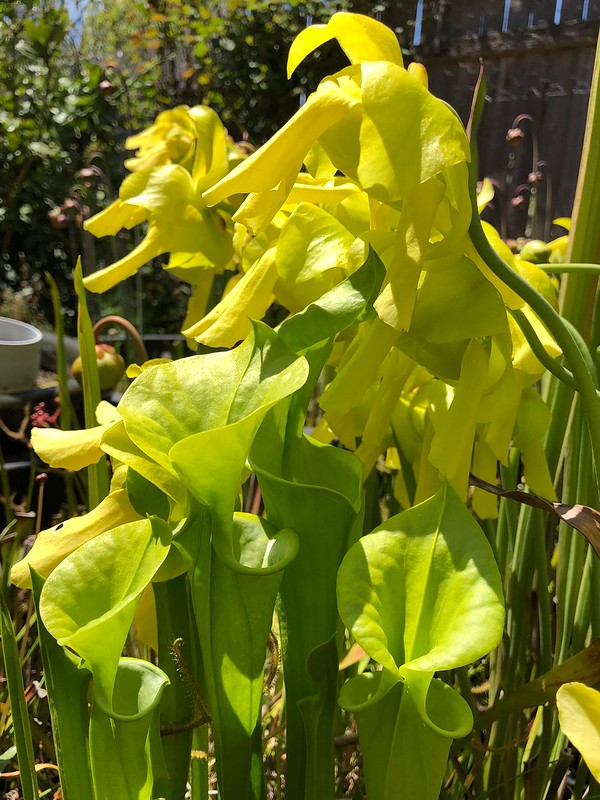
The Sarracenia flava have hit their peak of flowers for this year, and they look spectacular! Here’s some blooms from assorted plants:
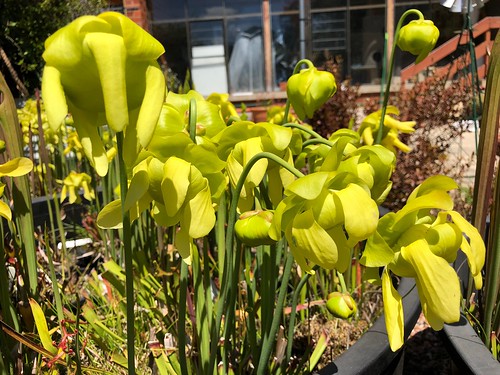
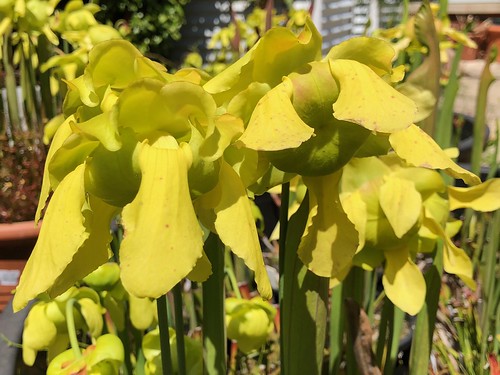
Sarracenia flava in flower, 2018-2019 season Sarracenia flava in flower, 2018-2019 season

Sarracenia flava in flower, 2018-2019 season Sarracenia flava var. rubricorpora in flower, 2018-2019 season

Sarracenia flava var. atropurpurea in flower, 2018-2019 season Sarracenia flava in flower, 2018-2019 season

Sarracenia collection in flower, 2018-2019 season

These photos are actually showing the collection past its peak (25 October), as some petals were already starting to fall. As luck would have it, I was away with work when the peak came (I suspect Tuesday was the actual peak).
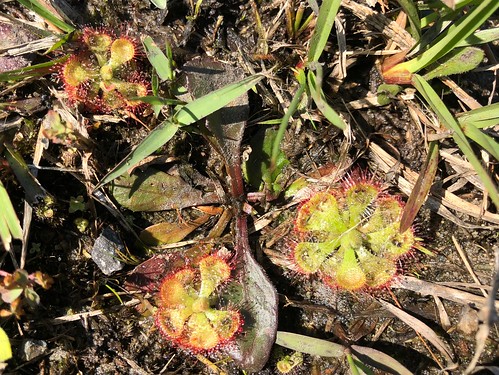
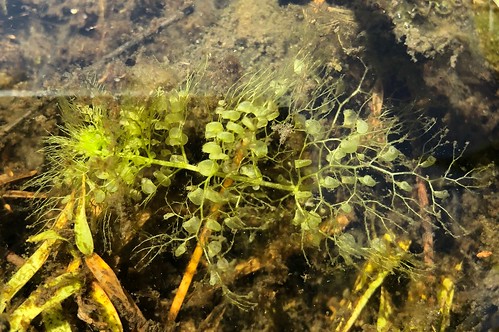
Drosera burmannii; Newcastle Airport, NSW. Utricularia australis; Newcastle Airport, NSW

As a small consolation, I managed to find nice populations of Drosera burmannii and Utricularia australis where I was near Newcastle, NSW. Incidentally, the plants of D. burmannii I brought from an AUSCPS member last year self-sowed enough seed that I should have a lovely carpet of them shortly in the VFT pot.
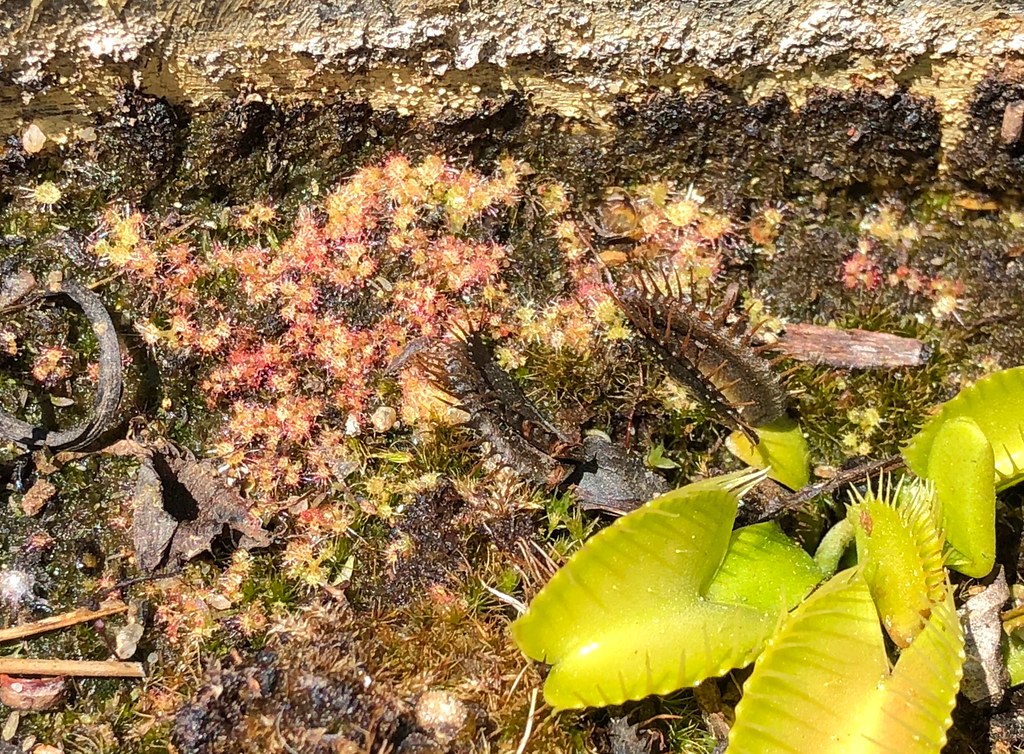
Drosera burmannii seedlings with VFT

Speaking of which, the VFT collection has also done well and is emerging from dormancy. I’ve been busy nipping flower stalks off – I’ve never managed to get seed to set from my flytraps. Some Drosera pulchella gemmae I got off ebay Australia have also produced a goodly number of plants that are getting bigger, and each week I find a couple more between the flytraps. I’ll get the macro lens out and get some close-up shots of them soon.
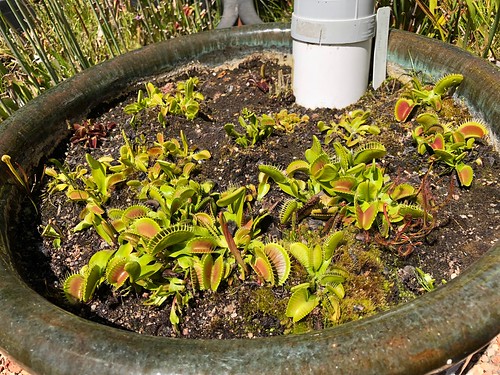
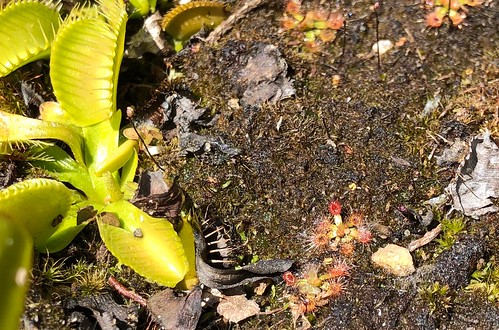
Venus’ flytrap collection, Spring 2018 Drosera pulchella and Dionaea muscipula

Yesterday, I got in and pollinated as many S. flava flowers as I could. I selfed most things, but made a few strategic crosses. One was between two very nice S. flava var. cuprea clones, one from Gotcha! Plants and another from a local grower, Ross Rowe.
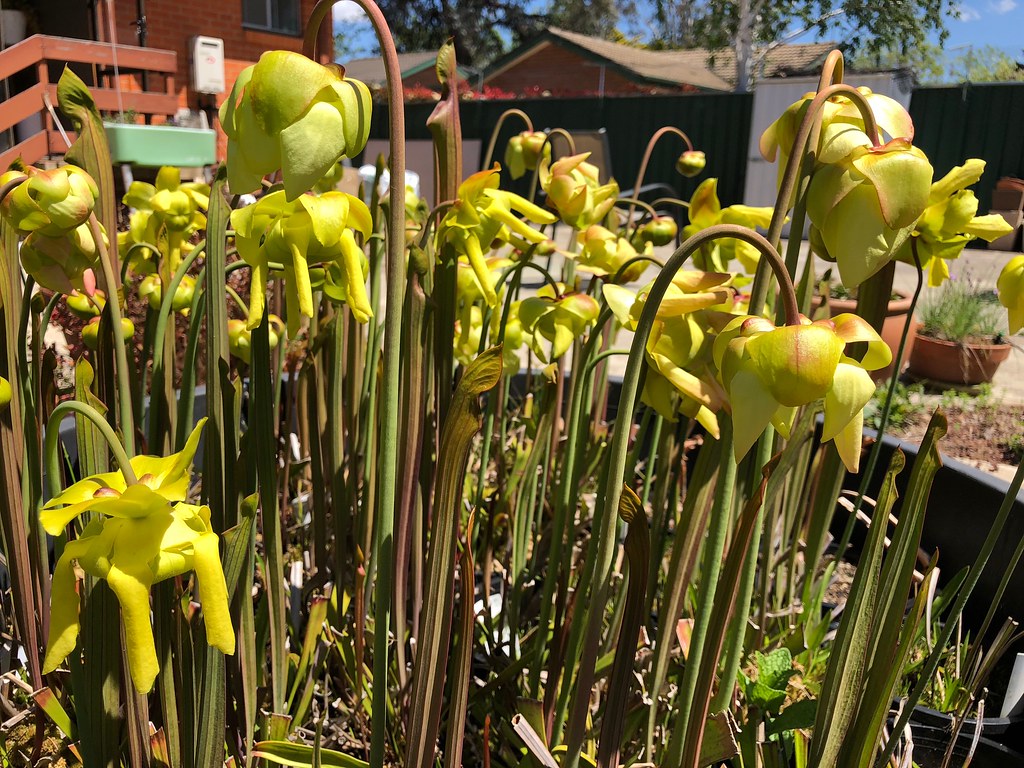
Sarracenia flava var. atropurpurea in flower, 2018-2019 season

The other was a forward and reverse cross between S. flava var. atropurpurea from Blackwater State Forest, Florida (this is the first year that clone has flowered for me) and the atropurpurea clones FRT 1-1 and FRT 1-5. Here’s a photo of the Blackwater SF clone’s flower:
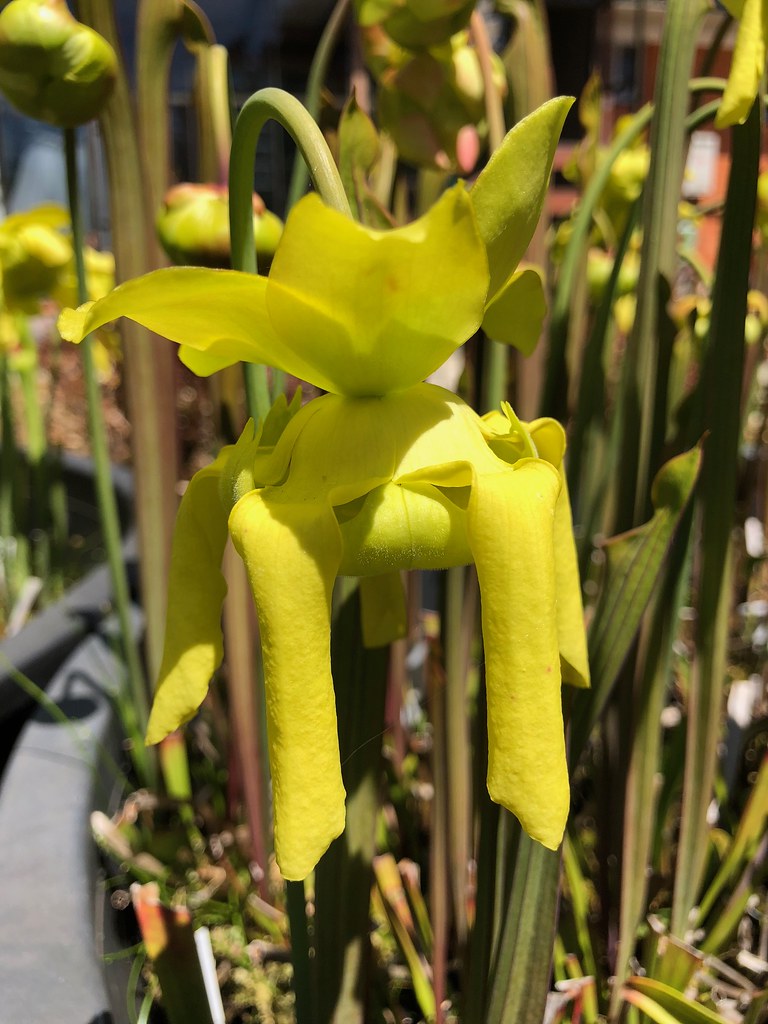
Sarracenia flava var. atropurpurea (Blackwater S.F.) in flower, 2018-2019 season

One thing that I haven’t seen before this year is the honeybees taking an interest in the flowers. They seem to be efficient pollinators, as they enter the flowers via the stigma and thoroughly dusted in pollen. The below bee is not so covered, as she is a little de-fuzzed (setulae rubbed from the scutum) and probably did not pick up any pollen from the stamens as a result. Hopefully, they haven’t messed up my crosses…
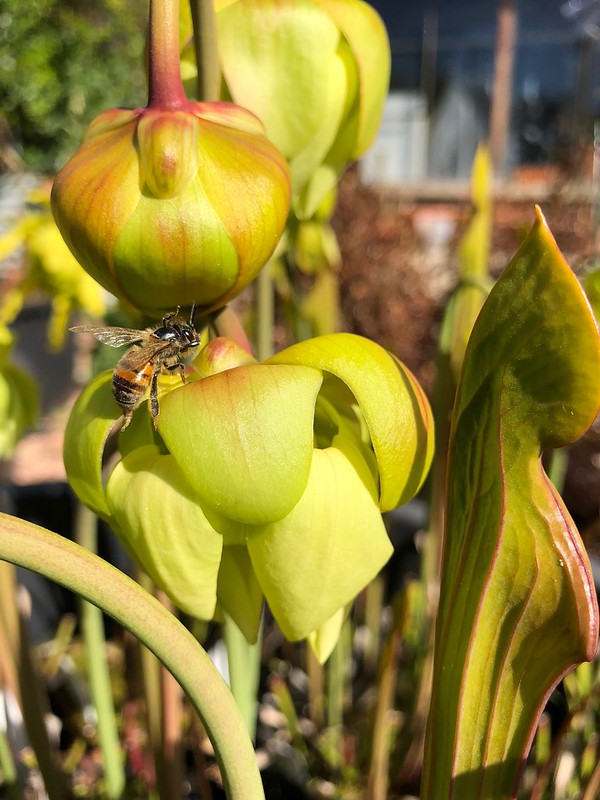
Sarracenia flava var. atropurpurea with honeybee taking off after a probable pollination visit

The first pitchers have opened too, with S. flava var. maxima from Honeysuckle Road, Harleyville, NC beating out a pot of S. flava var. atropurpurea by a few days.
Sarracenia flava var. maxima (Honeysuckle Road, Harleyville, NC) in flower, 2018-2019 season

Wednesday, July 27, 2011

The first signs of spring, 2011

Finally, a chance to write my blog again! July has disappeared with work commitments, so I'm grateful to finally settle back into a more gentle rhythmn. Its deepest wintere here, and here is the view from our backyard to the Brindabella Ranges, 30 kilometers to the southwest. It stayed on the ground for a good week after I took this photo, with the last of it melting on 20 July. There is still snow on Mount Bimberi, the highest peak in the Australian Capital Territory, as I write this.

The Brindabella Ranges with freshly fallen snow. Left to right are Mount Gingera, Mt. Ginini and Mt. Franklin. The Drosera peltata site I visit is in the hills below Mount Ginini at Smoker's Gap (not visible).

Saturday, December 4, 2010

Sarracenia flava var. atropurpurea - Reytter clone 1


Data at a glance...

Latin name                           Sarracenia flava var. atropurpurea
Clone name                          Reytter's clone
Acquired                               Summer 2009, at the AUSCPS Mt Tomah sale day
Pitcher flush pattern            1-2: 1+(s): P (Sp: Su: Au) 
Growth strength                   Slow to grow and divide.
Division types                      Meristem division at flowering. No evidence of rhizome node division yet.

Pitcher description

Lid with filament under-developed, maroon red with veins weakly marked, margin not undulating. Throat with thin red thoat patch and venation extending into the upper pitcher and lid. Pitcher tube interior tan, tube externally maroon red. Pigment reduced to absent entirely if repotted. Flower yellow, petals narrow, margins undulating, flava type scent.

Notes

This clone originates from the collection of Phil Reytter, but its earlier history is unknown. It recently became obvious that a second of Phil's S. flava is a var. atropurpurea (ie. his var. cuprea), so this is clone 1 because it is the plant he has historically sold as var. atropurpurea. This and Reytter clone 2 are probably the most pure strains of S. flava var. atropurpurea present in Australia as mature plants. Like with other clones of this variety, clone 1 is not a particularly robust plant (clone 2 is stronger and gets a lot larger). It produces 1-2 pitchers in spring, followed by a few weak, floppy pitchers mid season. My plant has not divided via rhizome nodes as yet, only by meritstem division induced by flowering. I am eager to see how it goes in future, as I this year moved it into a 20 cm (9") pot that should provide a few years of stable growing conditions. This plant does not take kindly to root interference. I am quite partial to S. flava var. atropurpurea, so this plant has pride of place in the collection.

Thursday, November 11, 2010

Focus on: Sarracenia flava var. atropurpurea

Sarracenia flava var. atropurpurea is the all red form of Sarracenia flava. The maroon red colour and elegant curves of the pitcher give this plant some serious allure - grace, class and elegance. It has a well-earned reputation for being a finicky plant in cultivation - if it is not happy, it sulks by loosing the red from the pitchers. Growth of the pitchers is not necessarily affected, just the colour. The reason it does this is not known. My theory for the colour loss is that any abrupt change to the growing causes the plant to go into survival mode by loosing its pigments. In plants, red pigments act as a sunscreen that block out excess light and keep photosynthesis at a level suitable for the plant's growth rate. When we move a cultivated plant, the conditions it experiences change very sharply, as would happen if a plant is moved by a flood or dug up by an animal. Such things are major issues for a plant that would threaten its survival, and see the plant want to store as much energy as possible to re-grow. Removing the red pigments would be one way of storing up more energy for the rest of the growing season. Just a theory, but it seems logical...

I have got good results with the three clones of var. atropurpurea that I grow by trying to minimise as much disturbance to the plant as possible. I repot well before the plants break dormancy and start growing - dormant plants seem to be more tolerant of disturbance than ones that are growing. When repotting, I also use a gentle rose of water to wash soil from the roots, rather than remove this by hand. I also leave the plants be for the entire season once they start growing -so no moving the pots. A large pot will also allow these plants to grow undisturbed for as long as possible. I am thinking of using pine needles to keep the peat acid and make it last longer and increase the time between repottings.

As for the clones I grow, two have been up for a month now, while the other one is only opening its pitchers today. The best plant I have is one from Fly Free Zone in Queensland called "FRT 1-1". It is more vigorous than the other clones I have and makes very ornate, intensely red pitchers with a big mouth. The photo below is of the first pitcher of the season, which has not completely coloured up. The second pitcher of the season is already becoming darker in the pitcher tube, so it should be magnificent. This plant is also interesting in that its flower has a slight tinge of pink to it - this, and the concentrations of red pigment in the lid, suggest one of its ancestors was a S. leucophylla. I class it as a flava because of the flower and pitcher morphology - the issue with interfertile plants is often where to draw the line of defining a species.


 Sarracenia flava var. atropurpurea "FRT 1-1" - pitcher and flower

One of its siblings, "FRT 1-5", starts life as a flava var. cuprea lookalike, but soon becomes solidly red. Interestingly, this clone gets the cut throat of flava var. rugellii, something I have not seen in other plants. It has yellow flowers typical of S. flava. Both it and FRT 1-1 came from a batch of Sarracenia flava seed of unknown provinance sold by the late Fred Howell.


 Sarracenia flava var. atropurpurea "FRT 1-5"

The third clone I grow came from Phil Reytter at Lithgow. It gets solid maroon pitchers, but is a much more slender plant that is also slow to grow. Others have has issues with this clone keeping its colour, but stabilising it over a couple of seasons will help. Despite repotting, my plant has come up with the best pitchers yet - I'll post photos once the pitchers open and reach their potential.